
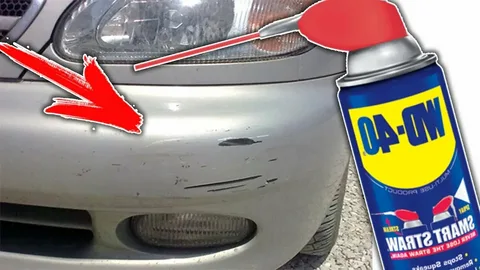
A few months ago, a customer walked into our workshop holding a can of WD-40, looking half-guilty. He’d sprayed it on his bumper the night before to get rid of a sticky patch of tree sap, and now he was worried he’d ruined his clear coat. That conversation is the reason this article exists. Almost every car owner has a can of WD-40 sitting in their garage, and almost every car owner has, at some point, wondered whether it’s actually okay to use it on their vehicle’s exterior. So let’s settle this properly, with real experience from the shop floor, not just recycled internet advice. If your goal is simply to remove stains from car paint without causing new problems, the answer isn’t a flat yes or no — it depends entirely on how you use it.
This guide walks through everything you need to know about WD-40 on car paint — what it does, when it helps, when it can hurt, and how to use it the right way so you don’t end up with a dull patch or a fresh set of swirl marks.
What Exactly Is WD-40?
WD-40 Multi-Use Product is a water-displacing, petroleum-based spray originally designed to prevent corrosion and loosen rusted or stuck components. It’s a workshop staple because it’s genuinely useful for freeing squeaky hinges, loosening seized bolts, and displacing moisture from electrical connectors. It was never designed as a car cleaning product, and that’s the first thing people misunderstand when they reach for it on their bodywork.
Because it’s a light lubricant with solvent properties, it also happens to be decent at breaking down sticky residues — which is exactly why people started experimenting with WD-40 on automotive paint in the first place. Bug splatter, tar, sap, and sticker glue all soften under it. That’s the appeal. But “it works” and “it’s ideal” aren’t the same thing, and that distinction matters a lot when you’re talking about a painted surface.
People often ask us whether it’s fine to use WD-40 for car paint the same way they’d use it on a squeaky door hinge. It isn’t quite the same thing — automotive paint is a finished, UV-exposed surface, not a piece of raw metal, so the same product needs to be used far more carefully here than it would under the hood.
Is WD-40 Safe on Car Paint?
This is the question everyone actually wants answered, so here it is directly: used correctly, in small amounts, for short contact time, WD-40 is generally safe on modern clear-coated paint. Used carelessly — left sitting for hours, sprayed over large panels, or used as a regular cleaner — it can dull the finish, strip wax, and in rare cases affect certain plastic trims and decals.
The key word is correctly. WD-40 on car paint works well as an occasional spot treatment for stubborn residue, not as a daily or weekly cleaning routine. Think of it the way you’d think of a strong degreaser in your kitchen: perfect for one tough spot, not something you’d wipe your whole countertop with every day.
Understanding Car Paint Layers Before You Spray Anything
To understand why some products are safe and others aren’t, you need to understand car paint layers. Most modern vehicles have four layers sitting on top of the metal or plastic body panel:
- E-coat / primer — the base rust-protection layer, bonded directly to the metal.
- Basecoat — this is the actual color layer.
- Clear coat — a transparent resin layer that gives the paint its shine and protects the color underneath from UV rays, oxidation, and minor abrasion.
- Wax or sealant — an optional protective layer many owners add on top of the clear coat.
Everything you spray on your car interacts primarily with that clear coat, and sometimes with the wax layer sitting above it. When we talk about WD-40 on car paint being “safe,” what we really mean is that it doesn’t eat through healthy clear coat when used briefly. But it absolutely can strip away your wax layer, which is why panels treated with WD-40 often need to be rewaxed afterward. If your car paint layers are already compromised — hairline cracks, peeling clear coat, previous heavy sun damage — any solvent-based product, WD-40 included, should be used with extra caution, if at all.
Common Reasons People Reach for WD-40 on Car Paint
In our experience at the garage, there are four recurring situations where customers use WD-40 on their vehicle’s exterior:
- Bug and tar remover duty after a long highway drive, when the front bumper and hood are covered in dried insect residue and tar spots that a regular wash won’t touch. Tar removal in particular tends to be the number one reason people first pick up WD-40 for their car.
- Tree sap removal, especially for cars parked under trees, where sap hardens into a sticky, almost glue-like patch. A second round of tree sap removal a few days later is common if the sap wasn’t fully dissolved the first time, so don’t worry if one pass isn’t enough.
- Adhesive residue removal after peeling off an old parking permit, dealership sticker, or pinstripe.
- General automotive exterior maintenance touch-ups between full details, when someone just wants a quick fix for one ugly spot.
In every one of these cases, WD-40 is being used as a targeted spot treatment, not a full-body cleaner. That’s the correct use case, and it’s the one we recommend to customers who ask us about it.
How to Use WD-40 on Car Paint Safely (Step-by-Step)
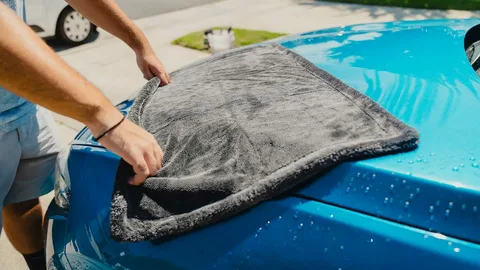
If you’re going to use WD-40 on car paint, here’s the process we walk customers through so they don’t damage the finish:
- Wash the area first. Rinse off loose dirt and grit around the spot. Spraying WD-40 over gritty dirt can grind particles into the clear coat when you wipe.
- Spray a small, direct amount onto the stain — not the whole panel. A light mist is enough; you don’t need to soak the area.
- Let it sit for 60–90 seconds. This is enough time for it to soften bug residue, tar, or sap without sitting long enough to strip wax aggressively.
- Wipe gently with a microfiber cloth, using light pressure and straight-line motions rather than aggressive circular scrubbing.
- Wash the panel again with car shampoo and water to remove any oily WD-40 residue left behind.
- Dry and inspect. If residue remains, repeat rather than pressing harder or leaving the product on longer.
- Reapply car wax to the treated section, since WD-40 will have stripped whatever protective layer was there.
Skipping steps 5 and 7 is the single most common mistake we see — people spray it, wipe it, and drive off, leaving an oily film that attracts dust and leaves the spot looking duller than the rest of the car.
Does WD-40 Make Paint Shine?
Briefly, yes — right after application, WD-40 leaves a glossy, slick appearance because of its oil content. But this isn’t real paint protection or shine; it’s a temporary oily sheen that attracts dust and evaporates or wipes away within days. It should never be used as a substitute for actual paint protection through wax or sealant. If you want lasting shine, a proper carnauba or synthetic wax will always outperform WD-40’s short-lived gloss.
Can I Use Goo Gone on Car Paint?
This is the next question customers usually ask once they’ve heard WD-40 works for stickers and tar. So, can I use Goo Gone on car paint? The short answer: yes, in most cases, and it’s actually purpose-built for adhesive removal, unlike WD-40 which is a general-purpose product. Goo Gone is formulated specifically to dissolve sticky residues, so it tends to need less scrubbing than WD-40 for stubborn adhesive spots.
That said, can I use Goo Gone on car paint without any risk? Not entirely — it’s still a citrus-solvent-based product, and on older, single-stage, or already-weakened paint, it can cause dulling or discoloration if left on too long. The same rules apply as with WD-40: spot-test on a small hidden area first, apply sparingly, don’t let it sit for more than a couple of minutes, and always wash and rewax afterward.
WD-40 vs Goo Gone vs Other Cleaning Products
| Product | Best For | Risk Level on Paint |
|---|---|---|
| WD-40 | Light tar, sap, bug residue, loosening stickers | Low, if used briefly and rinsed |
| Goo Gone | Adhesive, sticker glue, gum | Low–moderate, avoid prolonged contact |
| Clay bar | Bonded contaminants across large areas | Very low, made for paint |
| Isopropyl alcohol | Wax stripping, prep before coating | Moderate, drying to paint if overused |
If you’re dealing with adhesive residue removal as a one-off task, Goo Gone is usually the more purpose-built choice. If you’re dealing with bug and tar remover situations across scattered spots after a road trip, WD-40 tends to be the more convenient option already sitting in most garages, and it handles tar removal on rubber trim and plastic bumpers just as well as it does on painted metal.
Either way, the goal is the same: remove stains from car paint without grinding grit into the finish or leaving a chemical sitting on the surface longer than it needs to be there. Reaching for WD-40 for car paint spots is a fine habit as long as it stays occasional and deliberate, not routine.
Paint-Safe Cleaning Methods That Reduce Risk
If your real goal is to clean car paint safely rather than just remove one stain, the can of WD-40 Multi-Use Product in your garage is only part of the answer — technique matters as much as the product. Good car paint surface cleaning starts with the wash before you ever reach for a spot treatment.
Whatever product you use, these paint-safe cleaning methods reduce the chance of swirl marks or dullness:
- Always work on a cool panel, never in direct sun or on a hot hood.
- Use a clean, soft microfiber cloth — never paper towels or old rags that can carry grit.
- Test any new product on a small, hidden area (inside the door jamb, for example) before using it on a visible panel.
- Rinse thoroughly after any solvent-based treatment.
- Follow up with wax or sealant to restore the protective layer.
These habits matter more than which specific product you choose, because most paint damage from spot cleaners comes from technique — scrubbing too hard, leaving product on too long, or using a dirty cloth — rather than the chemical itself.
Mistakes That Cause Damage
From what we’ve seen in the shop, damage almost never comes from a single, careful application of WD-40. It comes from:
- Spraying an entire panel or the whole car “to make it shine.”
- Leaving it on for extended periods, sometimes overnight.
- Rubbing hard with a dry cloth instead of wiping gently.
- Never rewashing or rewaxing afterward, leaving an oily film that collects road grime.
- Using it repeatedly as a weekly cleaner instead of an occasional spot fix.
If you keep WD-40 on car paint to occasional, targeted use, and always follow up with a proper wash, you’re very unlikely to see any lasting damage.
Protecting Car Paint Finish After Using WD-40
Once you’ve removed the stain, take the extra few minutes to protect car paint finish quality rather than leaving the spot bare. Wash the area with a pH-balanced car shampoo, dry it with a clean microfiber towel, and apply a fresh coat of car wax or synthetic sealant. This restores the paint protection layer that WD-40 strips away and helps the treated spot blend back in with the rest of the car’s finish instead of looking patchy or dull.
This last step is really what separates people who use WD-40 on car paint without any issues from people who end up with a dull, patchy panel. Skipping the rewax step to protect car paint finish is the single easiest mistake to avoid, and it takes less than five minutes.
Regular automotive exterior maintenance — washing every one to two weeks, waxing every few months, and parking away from trees when possible — reduces how often you’ll even need spot treatments like WD-40 or Goo Gone in the first place.
A Real Example From the Shop Floor
The customer I mentioned at the start of this article had left WD-40 on his bumper overnight, and by morning the treated patch looked slightly duller than the surrounding paint. We walked through it with him step by step: we washed the panel with regular car shampoo, clayed the small affected area to lift any remaining residue, and machine-polished it lightly before applying a fresh coat of wax. Within twenty minutes, the dullness was gone and the panel matched the rest of the car again. That’s a fairly typical outcome — WD-40 on automotive paint left too long causes a cosmetic issue, not permanent damage, and it’s almost always fixable with a proper wash and polish.
That experience is exactly why we tell customers to think of WD-40 as a fast, five-minute tool rather than something to leave soaking in. If your priority is genuinely to clean car paint safely, treat every application as short and deliberate: spray, wait under two minutes, wipe, rinse, and move on. The moment you start thinking of it as an overnight soak or a full-body cleaner, you’ve moved outside the safe zone that makes WD-40 on car paint a low-risk trick in the first place.
We’ve also had customers come in confused about why one spot of their hood looks glossier than the rest after using WD-40 for car paint stains. That’s simply the oily residue catching light differently before it’s washed off — once the panel is properly cleaned and rewaxed, the sheen evens out and disappears. Good car paint surface cleaning habits, done consistently, prevent this patchy look from happening at all, because the panel never builds up the kind of stubborn residue that needs an aggressive spot treatment to begin with.
When to Let a Professional Handle It
Spot-treating a bit of tar or sap is a fair DIY job. But if your car’s clear coat is already peeling, oxidized, or scratched, or if a large area is affected, it’s worth having a professional detailer assess it before you experiment further with home remedies. Paint correction, buffing, and re-sealing require the right compounds and equipment to avoid making the problem worse.
While our team primarily handles mechanical and under-the-bonnet work rather than paint correction, we regularly see customers who come in for other maintenance and ask about exterior care during the same visit. At Marwat Garage in Ajman and Sharjah, alongside general servicing, we handle jobs like fuel tank replacement, fuel injector diagnostic and cleaning, and throttle body repairs — the kind of work that keeps your car running as well as it looks. If you’re already bringing your car in for something mechanical, it’s a good moment to ask about the health of your paint and exterior finish too.
Frequently Asked Questions
Is WD-40 safe on auto paint? Yes, in small amounts and short contact time it’s generally safe on healthy clear coat. Always wash and rewax the spot afterward.
How long do you leave WD-40 on car paint? Around 60 to 90 seconds is enough to loosen most residue. Leaving it on longer raises the risk of dulling the finish.
Does WD-40 remove scratches from car paint? No, WD-40 does not repair or remove real scratches, it only cleans debris around them. It may briefly hide light swirl marks with its oily sheen, but this fades quickly.
Can you polish a car with WD-40? It’s not a polish and shouldn’t be used as one on a regular basis. It leaves a temporary shine but no lasting protection like a real polish or wax provides.
Does WD-40 make paint shine? Yes, it gives a short-term glossy look due to its oil content. That shine fades or attracts dust within a few days, unlike proper wax.
Can WD-40 be used to remove scratches from glass? No, it does not remove actual scratches from glass, though it can sometimes make very light surface marks less visible temporarily. Deep scratches on glass need professional polishing or replacement.
What removes car scratches fast? Light surface scratches can often be reduced with a rubbing compound or scratch-removal polish applied by hand or machine. Deeper scratches need professional paint correction or touch-up paint.
Can WD-40 spray be used to remove car scratches? No, it cannot remove real scratches, it only cleans dirt and grime that may sit inside them. Any improvement in appearance is temporary and cosmetic only.
Can toothpaste remove scratches from car paint? Toothpaste can very slightly reduce the visibility of extremely light surface scratches due to its mild abrasiveness, but results are minimal and inconsistent. For real scratch removal, a proper automotive rubbing compound works far better and more predictably.
WD-40 on car paint is one of those topics where the internet tends to swing between two extremes — “it’ll ruin your paint” or “it’s totally fine for everything.” The truth, based on what actually happens on cars we service, sits in the middle. Used sparingly, as a spot treatment for bug residue, tar, sap, or sticker glue, and followed up with a proper wash and wax, it’s a safe and genuinely useful trick. Used as a general cleaner or left sitting for hours, it can dull your finish and strip away protection you’ll need to reapply anyway.
Keep it occasional, keep it quick, and always finish with a wash and a coat of wax. That’s the difference between WD-40 being a handy garage trick and being a paint problem you didn’t need to create.