Pattern Failure Analysis
Keyless Entry & Key Fob Programming in Ajman – Marwat Garage
Lost your key fob? Is your car not responding to remote entry? These problems can be frustrating, stressful, and sometimes even leave you locked out of your vehicle. Keyless entry systems are sophisticated, and a simple guess can lead to costly mistakes. You need a professional who knows exactly how to handle these modern car security systems.
At Marwat Garage, we specialize in keyless entry and key fob programming services for all vehicle makes and models. Whether your remote isn’t working, you need a replacement key fob, or your car’s keyless system has a fault, our certified auto electricians provide fast, precise, and reliable service. We diagnose the issue thoroughly and repair it on-site — no need to visit a dealership or pay unnecessary costs. With our service, your car’s security and convenience are restored quickly, letting you drive worry-free.
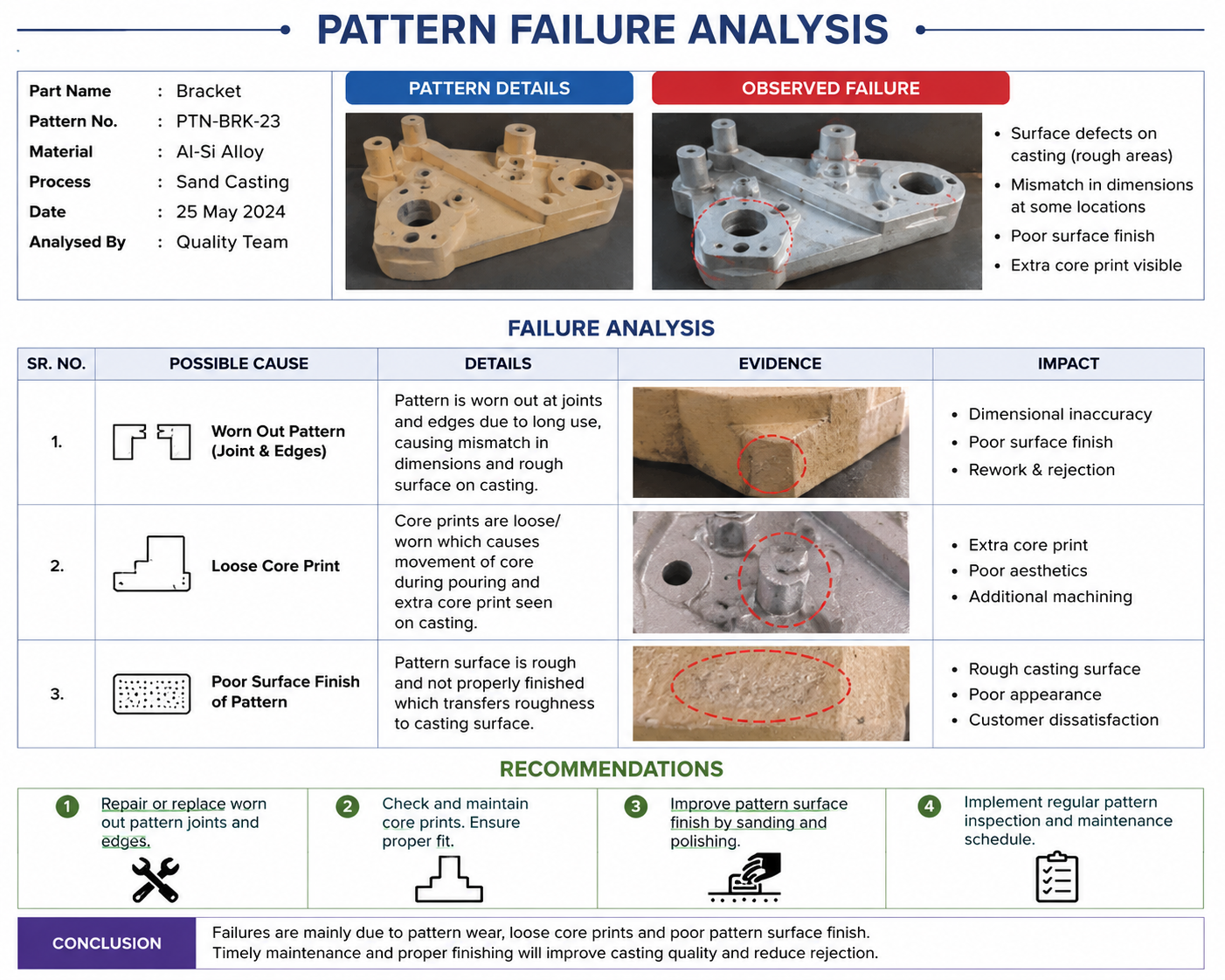
What Is Pattern Failure Analysis?
Pattern failure analysis is a structured, evidence-based diagnostic method that studies the nature, timing, location, and frequency of recurring faults in your vehicle. Rather than simply identifying what is currently broken, we investigate the conditions and underlying factors that caused it to break — and keep breaking.
We cross-reference your vehicle’s OBD2 fault history, freeze frame data, physical wear evidence, and manufacturer technical service bulletins (TSBs) to build a complete picture of the failure. This approach is used in aviation, heavy industry, and professional motorsport — and at Marwat Garage, we apply the same discipline to everyday passenger vehicles on Ajman’s roads.
This service is right for you if:
- A component keeps failing well before its expected service life
- Your check engine light returns within days of being cleared
- You have had the same repair done more than once with no lasting result
- Your vehicle failed the UAE emissions test again despite a recent repair
- Your car was serviced at another workshop but the problem came back
- No one has been able to give you a clear, permanent explanation
If any of these sound familiar, pattern failure analysis is the diagnostic step that was missing.
Common Pattern Failures We Identify and Solve
Premature Tyre Wear
One-sided wear, centre wear, or feathering that returns after every replacement is not a tyre quality problem — it is a geometry problem. Hidden alignment faults, worn suspension components, incorrect tyre pressures, or a previously damaged steering component are almost always responsible. We identify exactly which measurement is out of specification and trace it to the cause.
Recurring Check Engine Lights
Fault codes like P0420 (catalytic converter efficiency below threshold), P0300 (random misfire), P0171 (fuel system running lean), or P0087 (fuel rail pressure low) that return after being cleared mean the root cause was never addressed — only the warning was switched off. Our freeze frame data captures the exact engine operating conditions — RPM, load, temperature, fuel trim — at the precise moment the fault triggered. That data tells us what the scanner code alone cannot.
Brakes That Keep Warping or Squealing
Rotors that warp within weeks of replacement, or brake pads that wear unevenly and squeal despite being new, are almost always caused by a sticking brake caliper, incorrect brake fluid specification, heat build-up from a specific driving pattern, or an unresolved brake bias fault. Fitting new rotors without investigating the cause produces the same result every time.
Batteries and Alternators That Keep Failing
A new battery that drains within weeks, or an alternator that fails prematurely after replacement, almost never indicates a faulty component. It indicates an undiagnosed parasitic electrical drain, an accessory drawing excessive current, or a charging circuit fault that was present before and after the replacement. We identify the exact current draw and trace it to the source.
Repeated Overheating Episodes
A vehicle that overheats, receives a new thermostat or coolant flush, and overheats again within weeks is dealing with something the previous repair did not reach. Compromised head gaskets, blocked coolant passages, an air pocket in the cooling system, or a water pump that is circulating at reduced capacity are the usual culprits. We pressure-test the cooling system, check combustion gas contamination in the coolant, and verify flow rates before forming any conclusion.
Suspension Components Failing Too Soon
Ball joints, control arm bushings, tie rod ends, or shock absorbers wearing out significantly ahead of their expected service life almost always indicate hidden structural or alignment damage — often from a previous accident — that is placing abnormal load on specific components. Replacing the worn part without correcting the geometry simply accelerates wear on the new part.
Fuel Economy That Keeps Declining
A vehicle whose fuel consumption has gradually worsened over months — despite previous servicing — is often running with a combination of minor issues that individually seem insignificant but together have a measurable cumulative effect. Slightly restricted injectors, a partially blocked air filter, a lazy oxygen sensor, and minor ignition timing drift can each reduce efficiency by a small amount. Together, they add up to a noticeably thirsty engine. Pattern failure analysis identifies the full picture, not just the most obvious fault.
Other Car Repair Services
- - Engine Performance Service (Diagnostics)
- - Standard & Electronic Ignition Systems
- - Fuel Injection Service & Component Analysis
- - Emission Controls
- - Pattern Failure Analysis
- - Fuel Pump Service (Mechanical & Electric)
- - Carburetor Rebuilding & Set-Up Service
- - Fuel Tank Replacement & Services
- - Gas Gauge & Fuel Tank Sending Unit Service
- - Fuel Injector Diagnostic & Cleaning Service
- - Throttle Body Repairs & Clean And Service
- - Vacuum Leaks Diagnosed W/ Smoke Detection
- - Engine Replacement Service
- - Engine Repairing Service
- - Timing Chain & Timing Belt Service
- - Valve Work, Valve Grinding, And Cylinder Head Repairs
- - Engine Oil Leaks: Diagnose, Clean, And Recommended Repairs
- - Internal Gaskets Replacements
- - Front & Rear CV (Constant Velocity) Axle Service & Boot Service
- - Differential Repairs (Both Front & Rear Trans-Axle & Conventional)
- - Drive-Shaft Service
- - Suspension Inspection & Service
- - Wheel Alignment (Front & Rear)
- - Tire Rotation Service
- - Power Steering Repairs
- - Power Steering Flush Service
- - Wheel Bearing Replacements
Why Recurring Car Problems Are So Common in the UAE
Ajman’s driving conditions are uniquely demanding on vehicles. Extreme summer heat accelerates wear on rubber components, seals, and electrical insulation. Fine sand and dust clog air filters, sensors, and cooling fins faster than in most other environments. Heavy stop-and-go traffic through industrial areas stresses brakes, suspension, and cooling systems continuously. And long highway runs on Emirates Road and Sheikh Mohammed Bin Zayed Road put sustained load on tyres, drivetrain, and engine management systems.
Add to this the fact that a large proportion of vehicles on UAE roads are imported used cars — often with incomplete service histories, previous accident damage that was never properly repaired, or non-OEM parts fitted by a previous owner — and the conditions for pattern failures become very predictable.
Most workshops in Ajman will fix what they see in front of them on the day. That is not wrong — but it is incomplete when the same fault has already been repaired once or twice before. Pattern failure analysis starts where regular diagnostics ends.
Our Pattern Failure Analysis Process
At our workshop in Industrial Area 2, Ajman, we follow a disciplined, step-by-step process designed to find answers — not just parts to replace.
- Failure History Consultation We start by listening. You walk us through the full repair history — what was done, when, how long each fix lasted, and under what conditions the problem returns. This conversation alone often reveals what previous workshops missed. We document everything before touching the vehicle.
- OBD2 Full History & Freeze Frame Retrieval Our diagnostic system retrieves not just current fault codes but the complete stored fault history — including pending codes that have not yet triggered a warning light, and freeze frame data captured at the moment each fault occurred. Engine load, coolant temperature, fuel trim values, RPM, and vehicle speed at the time of the fault all help us understand the conditions driving the failure.
- Physical Failure Examination We examine how the failed component failed — not just that it failed. Tyre wear angles, brake pad wear distribution, bearing race markings, bushing deformation direction, and corrosion patterns all point toward a specific cause. We photograph and document all findings so you can see exactly what we see.
- System-Wide Inspection No component fails in isolation. We inspect every system connected to the recurring fault — suspension geometry, electrical circuits, cooling flow rates, fuel system pressures, or emission system integrity — until we identify the upstream origin of the failure pattern.
- Technical Service Bulletin Review We cross-reference your vehicle’s make, model, year, and engine code against known manufacturer TSBs and recall notices. Many pattern failures are already documented by the manufacturer with a specific, permanent fix. If a TSB applies to your vehicle, we apply it correctly — not a workaround.
- Written Root Cause Report You receive a clear, documented root cause report explaining exactly why the failure keeps occurring, what needs to be done to stop it permanently, and a prioritised repair plan with transparent pricing. No vague explanations, no verbal-only summaries — everything in writing before we proceed.
- Repair, Verification & Road Test Once repairs are completed, we road test the vehicle across the relevant operating conditions and run a final OBD2 scan to confirm no outstanding faults remain. We verify the fix, not just the repair.
What It Costs — And What It Saves
The cost of repeated repairs on the same recurring fault adds up quickly. A suspension component that costs AED 300 to replace and fails every four to five months costs AED 720–900 per year — indefinitely — until someone identifies and corrects the root cause. A single pattern failure analysis appointment that reveals the underlying geometry fault eliminates that cycle permanently.
Our pattern failure analysis is charged at a transparent flat-rate diagnostic fee, which is credited in full toward any repair work we carry out as a result. You will always receive a written quote before any work begins — no hidden charges, no pressure to proceed.
Call us today at +971-564761112 — bring us the problem that has been coming back, and we will tell you exactly why it keeps happening and what it will take to stop it.
The Safety Case for Pattern Failure Analysis
Recurring vehicle faults are not just expensive — they are a genuine safety risk. A tyre that keeps wearing unevenly is a blowout risk on any UAE highway. A brake system with an unresolved caliper fault deteriorates progressively. A cooling system that keeps overheating risks head gasket failure and engine damage at the worst possible moment.
UAE Traffic Law requires vehicles to be in a safe and roadworthy condition at all times. A known recurring fault that has not been permanently resolved is a liability — both on the road and at your next Mulkiya vehicle inspection.
Identifying and eliminating the root cause of a pattern failure is not just good vehicle maintenance. It is the responsible choice for every driver sharing Ajman’s roads.
Why Choose Marwat Garage for Pattern Failure Analysis
- Experienced technicians trained to look beyond the immediate symptom
- Advanced OBD2 diagnostics with full freeze frame and fault history access
- Manufacturer TSB database cross-referencing for all major vehicle brands
- Clear written root cause reports — no verbal summaries, no guesswork
- Transparent, upfront pricing with no hidden charges
- OEM and OEM-grade parts used on every repair
- Trusted by car owners across Ajman, Sharjah, and Dubai
- Conveniently located at Industrial Area 2, Ajman
Frequently Asked Questions
We now have an FAQ list that we hope will help you answer
some of the more common ones.
The cost varies depending on your car’s make, model, and the type of key system it uses. Basic remote key fob programming is affordable, while smart key and proximity key programming for newer vehicles may cost more due to the advanced software required. Call us on +971-564761112 for a specific quote for your car.
In most cases, yes — but it depends on the make and model. Some vehicles require at least one working key to programme a new remote, while others allow a complete key replacement via OBD2 access. Our technicians will advise you after a quick diagnostic check.
If a fresh battery has not solved the problem, your key fob may have lost its synchronisation with the car’s ECU — this is a common issue after a battery change or flat car battery. The fix is a simple reprogramming, which we can do while you wait at our garage in Ajman.
Most key fob programming jobs take between 30 minutes and one hour. Smart key programming for newer models may take slightly longer if it requires extended ECU communication. We will give you an accurate time estimate when you bring in your vehicle.
We can source compatible replacement key fob shells and remotes for most popular vehicle makers sold in the UAE. If you already have a new fob, we can programme it for you. Call ahead to confirm availability for your specific model.
Got a questions?
Pulvinar neque laoreet suspendisse interdum consectetur libero id faucibus nisl. Lectus urna duis convallis convallis tellus.
Schedule Your Appointment Today
Your Automotive Repair & Maintenance Service Specialist