WD-40 on Car Paint: Is It Safe, and How Should You Actually Use It?
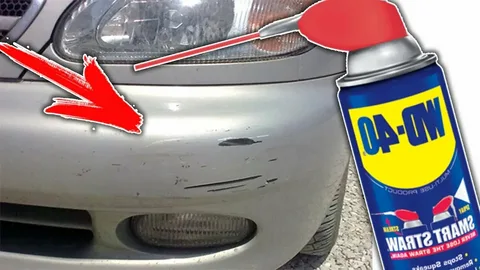
A few months ago, a customer walked into our workshop holding a can of WD-40, looking half-guilty. He’d sprayed it on his bumper the night before to get rid of a sticky patch of tree sap, and now he was worried he’d ruined his clear coat. That conversation is the reason this article exists. Almost every car owner has a can of WD-40 sitting in their garage, and almost every car owner has, at some point, wondered whether it’s actually okay to use it on their vehicle’s exterior. So let’s settle this properly, with real experience from the shop floor, not just recycled internet advice. If your goal is simply to remove stains from car paint without causing new problems, the answer isn’t a flat yes or no — it depends entirely on how you use it. This guide walks through everything you need to know about WD-40 on car paint — what it does, when it helps, when it can hurt, and how to use it the right way so you don’t end up with a dull patch or a fresh set of swirl marks. What Exactly Is WD-40? WD-40 Multi-Use Product is a water-displacing, petroleum-based spray originally designed to prevent corrosion and loosen rusted or stuck components. It’s a workshop staple because it’s genuinely useful for freeing squeaky hinges, loosening seized bolts, and displacing moisture from electrical connectors. It was never designed as a car cleaning product, and that’s the first thing people misunderstand when they reach for it on their bodywork. Because it’s a light lubricant with solvent properties, it also happens to be decent at breaking down sticky residues — which is exactly why people started experimenting with WD-40 on automotive paint in the first place. Bug splatter, tar, sap, and sticker glue all soften under it. That’s the appeal. But “it works” and “it’s ideal” aren’t the same thing, and that distinction matters a lot when you’re talking about a painted surface. People often ask us whether it’s fine to use WD-40 for car paint the same way they’d use it on a squeaky door hinge. It isn’t quite the same thing — automotive paint is a finished, UV-exposed surface, not a piece of raw metal, so the same product needs to be used far more carefully here than it would under the hood. Is WD-40 Safe on Car Paint? This is the question everyone actually wants answered, so here it is directly: used correctly, in small amounts, for short contact time, WD-40 is generally safe on modern clear-coated paint. Used carelessly — left sitting for hours, sprayed over large panels, or used as a regular cleaner — it can dull the finish, strip wax, and in rare cases affect certain plastic trims and decals. The key word is correctly. WD-40 on car paint works well as an occasional spot treatment for stubborn residue, not as a daily or weekly cleaning routine. Think of it the way you’d think of a strong degreaser in your kitchen: perfect for one tough spot, not something you’d wipe your whole countertop with every day. Understanding Car Paint Layers Before You Spray Anything To understand why some products are safe and others aren’t, you need to understand car paint layers. Most modern vehicles have four layers sitting on top of the metal or plastic body panel: Everything you spray on your car interacts primarily with that clear coat, and sometimes with the wax layer sitting above it. When we talk about WD-40 on car paint being “safe,” what we really mean is that it doesn’t eat through healthy clear coat when used briefly. But it absolutely can strip away your wax layer, which is why panels treated with WD-40 often need to be rewaxed afterward. If your car paint layers are already compromised — hairline cracks, peeling clear coat, previous heavy sun damage — any solvent-based product, WD-40 included, should be used with extra caution, if at all. Common Reasons People Reach for WD-40 on Car Paint In our experience at the garage, there are four recurring situations where customers use WD-40 on their vehicle’s exterior: In every one of these cases, WD-40 is being used as a targeted spot treatment, not a full-body cleaner. That’s the correct use case, and it’s the one we recommend to customers who ask us about it. How to Use WD-40 on Car Paint Safely (Step-by-Step) If you’re going to use WD-40 on car paint, here’s the process we walk customers through so they don’t damage the finish: Skipping steps 5 and 7 is the single most common mistake we see — people spray it, wipe it, and drive off, leaving an oily film that attracts dust and leaves the spot looking duller than the rest of the car. Does WD-40 Make Paint Shine? Briefly, yes — right after application, WD-40 leaves a glossy, slick appearance because of its oil content. But this isn’t real paint protection or shine; it’s a temporary oily sheen that attracts dust and evaporates or wipes away within days. It should never be used as a substitute for actual paint protection through wax or sealant. If you want lasting shine, a proper carnauba or synthetic wax will always outperform WD-40’s short-lived gloss. Can I Use Goo Gone on Car Paint? This is the next question customers usually ask once they’ve heard WD-40 works for stickers and tar. So, can I use Goo Gone on car paint? The short answer: yes, in most cases, and it’s actually purpose-built for adhesive removal, unlike WD-40 which is a general-purpose product. Goo Gone is formulated specifically to dissolve sticky residues, so it tends to need less scrubbing than WD-40 for stubborn adhesive spots. That said, can I use Goo Gone on car paint without any risk? Not entirely — it’s still a citrus-solvent-based product, and on older, single-stage, or already-weakened paint, it can cause dulling or discoloration if left on too long. The same rules apply as with WD-40: spot-test on
Car Paint Tester: The Complete Guide to Checking, Buying, and Understanding Vehicle Paint Thickness
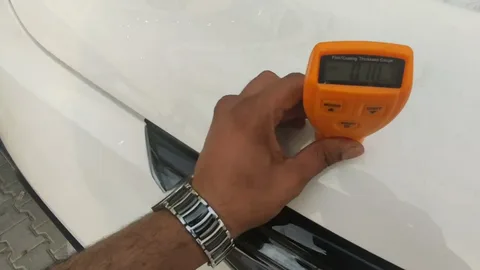
When I first picked up a car paint tester at our workshop counter almost eight years ago, I honestly thought it was just another gadget that customers wouldn’t care about. I was wrong. Within a month of using it on every used car that rolled into our garage for inspection, I realized this small device was saving people thousands of dirhams by catching hidden accident repairs before the deal was signed. At Marwat Garage in Ajman and Sharjah, a car paint tester is now one of the first tools we reach for, right alongside the lift and the diagnostic scanner. This guide is written from that hands-on experience — not from a textbook. I’ll walk you through what a car paint tester actually does, how to use one, what the numbers mean, and what other paint-related tools (from spray guns to sandpaper) you’ll likely need along the way if you’re serious about vehicle bodywork, whether you’re a buyer, a detailer, or a small garage owner like us. What Is a Car Paint Tester? A car paint tester is a handheld device used to measure the thickness of the paint layer on a vehicle’s body panels. Most technicians and detailers know it by a few other names too — automotive paint tester, paint depth gauge, or simply a paint thickness gauge. Whatever you call it, the job is the same: it tells you, in microns or mils, exactly how much paint (and sometimes filler) sits on top of the metal. Every factory-applied coat has a fairly predictable thickness. When a car has been in an accident and repainted, that thickness usually changes — sometimes dramatically. This is why a simple car paint tester has become such a critical tool for used car paint inspection. It doesn’t just tell you “yes there’s paint here”; it tells you whether that paint is original OEM paint or a repaint job hiding bodywork underneath. Why Paint Thickness Matters When Buying a Used Car I’ve lost count of how many customers have brought a car to Marwat Garage insisting the seller told them it was “accident free,” only for our vehicle paint inspection to tell a different story. This is the single biggest reason people search for a car paint tester in the first place. Here’s the logic in plain terms: factory paint on most vehicles sits between roughly 90 and 150 microns, depending on the manufacturer. If our device reads 250 microns on the front bumper but only 110 microns on the roof, that’s a clear sign of repaint detection — someone has resprayed that panel, likely after bodywork or an accident. This kind of car body paint analysis is exactly what separates a confident used car paint inspection from a guess. It’s worth noting that plastic bumpers and some non-ferrous substrate areas behave differently than steel panels, so an experienced eye still matters — the gauge gives you data, but reading that data correctly is a skill you build over time. How Digital Paint Thickness Gauges Work Most modern devices use a magnetic induction sensor for measuring paint over ferrous substrate (regular steel body panels) and an eddy-current method for non-ferrous substrate like aluminum panels. This is why good gauges are labeled as working on both galvanized steel and aluminum — cheaper units only handle one or the other, which is a problem on modern vehicles that mix steel doors with aluminum hoods or fenders. The reading appears almost instantly, usually within a second of contact, and is displayed in microns (μm) or mils depending on your regional setting. A digital paint meter of decent quality will hold calibration for years with proper care, and most professional-grade tools let you zero the reading against a known reference plate before you start, which keeps your paint thickness measurement accurate panel to panel. When I’m doing a full car body paint analysis, I take at least six to eight readings per panel — different manufacturers apply paint slightly unevenly even at the factory, so a single spot reading can be misleading. Averaging a few points on each fender, door, and bumper gives a much more reliable picture than relying on one number from a car paint checker. UV Light vs Digital Paint Thickness Gauges A lot of customers ask us whether a UV light for car paint inspection can replace a proper gauge. It can’t, but it’s a useful companion tool. Shining a UV car paint detector across a panel in low light can reveal overspray, masking lines, or subtle color mismatches that are hard to catch with the naked eye in daylight. That said, a UV car paint detector is a visual aid, not a measuring instrument. It won’t tell you the actual paint thickness in mm or microns the way a proper car paint detector with a sensor does. For a serious inspection, we always pair the two: UV light to spot visual inconsistencies, then the digital gauge to confirm with real numbers. If you only have budget for one, the digital device is the one that actually gives you defendable data. Choosing the Right Car Paint Tester for Your Needs Not every car paint tester is built the same, and the right choice depends on how often you’ll use it. Pocket pen-style testers — A car paint tester pen is compact, affordable, and fine for occasional buyers who just want peace of mind before purchasing one car. They’re not the most precise car paint checking device on the market, but for a one-time check, they do the job. Professional digital gauges — If you’re running inspections regularly, invest in a proper car paint check machine with dual ferrous/non-ferrous sensors, memory storage, and calibration certificates. This is what we use daily at Marwat Garage, and it’s the difference between a rough estimate and a report you can actually show a customer with confidence. App-connected devices — Some higher-end paint detectors for car inspection sync readings to your phone, building a full panel-by-panel map