
Battery Change-Over & Charging
Battery Change-Over & Charging: A Complete Guide for UAE Car Owners
You turn the key. Nothing happens. Or worse — you hear a slow, weak crank and then silence. A dead car battery is one of the most common and frustrating experiences for drivers, and in the UAE, it happens far more often than in cooler countries.
The extreme heat in Ajman and across the UAE is the single biggest enemy of car batteries. A battery that might last five or six years in Europe can fail in two to three years here — sometimes less. Understanding how your car battery works, when to replace it, and how proper charging keeps it healthy can save you from being stranded at the worst possible moment.
This guide covers everything UAE drivers need to know about battery change-over and charging service
How a Car Battery Works
Your car battery is a rechargeable lead-acid unit that performs two key jobs. First, it delivers a large burst of electrical power to start the engine. Second, it supports the vehicle’s electrical systems — lights, AC blower, infotainment, power windows — when the engine’s alternator alone cannot meet the demand.
Once the engine is running, the alternator takes over and recharges the battery continuously. This cycle — discharge on startup, recharge while driving — repeats every time you use your vehicle.
Inside the battery, lead plates sit submerged in a sulphuric acid electrolyte solution. When the battery discharges, a chemical reaction between the plates and the electrolyte produces electricity. When the alternator recharges it, the reaction reverses. Over time, this repeated cycling causes the lead plates to degrade and the electrolyte to break down — and the battery gradually loses its ability to hold a full charge.
In the UAE, heat dramatically accelerates this process.
Why UAE Heat Destroys Car Batteries Faster
Heat is the number one cause of premature battery failure worldwide — and the UAE has heat in abundance.
At temperatures above 35°C, the chemical reactions inside a lead-acid battery speed up. This sounds beneficial but it is not. The accelerated reactions cause the electrolyte fluid to evaporate faster, exposing the lead plates. Once the plates are exposed, they begin to sulfate — a process where lead sulphate crystals form on the plate surface, permanently reducing the battery’s capacity and ability to accept a charge.
In Ajman, under-bonnet temperatures during summer regularly exceed 70°C to 80°C. A battery sitting in this environment every day endures thermal stress that no manufacturer’s warranty period was designed for in a Gulf climate.
The result: batteries in the UAE typically last 2 to 3 years under average conditions, compared to 4 to 6 years in temperate climates. Vehicles parked outdoors in direct sun, with frequent short trips that do not allow full recharging, often see batteries fail even sooner.
Warning Signs Your Car Battery Is Failing
A battery rarely fails without giving warning signs first. Watch for these:
- Slow or laboured engine cranking. The engine turns over sluggishly before starting — or barely manages to start at all. This is the most common early warning sign of a weakening battery.
- Dashboard warning light. A battery or charging system warning light illuminated on your dashboard means the system has detected a fault — either in the battery itself or in the alternator that charges it.
- Electrical gremlins. Dim headlights, flickering interior lights, power windows moving slowly, or the infotainment system behaving erratically can all point to insufficient battery voltage.
- Engine starts fine but battery drains overnight. If your car starts normally when the engine is warm but struggles after sitting overnight, the battery is losing its charge retention — a sign of significant internal degradation.
- Swollen or bloated battery case. Excessive heat causes gases to build up inside the battery casing, causing it to swell. A visibly bloated battery is a safety risk and needs immediate replacement.
- Battery older than 2.5 years in the UAE. If your battery is approaching or past this age in UAE conditions, proactive testing is strongly recommended — even if the car starts normally today.
Other Car Repair Services
- Minor 5000 Km Service
- Routine 7000 KM Service
- Windshield Wipers
- CV (Constant Velocity) Maintenance
- Major 10,000 KM Service
- Belts & Hoses
- Vehicle Value & Car Pricing Service
- Headlight Aiming
- Battery Change-Over & Charging
- 7,500, 15k, 30k, & 60k Km Maintenance
- Transmission Fluid Service
- Lighting (Bulb Replacement)
- Cooling System Flush & Exchange
Battery Testing: Know Before You Replace
Not every starting problem is a dead battery. Before replacing a battery, a proper test should always be carried out.
- Voltage test. A basic multimeter check of the battery’s resting voltage gives a snapshot of its state of charge. A fully charged battery reads around 12.6 volts. Below 12.2 volts at rest suggests partial discharge or significant degradation.
- Load test. A load tester applies a controlled electrical load to the battery and measures how well it holds voltage under that load. This reveals whether the battery can actually deliver power under real-world starting conditions — something a simple voltage check cannot tell you.
- CCA (Cold Cranking Amps) test. Modern battery testers measure the battery’s actual CCA output and compare it to its rated specification. A battery showing significantly reduced CCA has lost cranking capacity and is at risk of failing, even if it is still starting the engine today.
- Charging system test. The alternator and voltage regulator are tested at the same time. A faulty alternator that is undercharging the battery will kill a new battery quickly. Confirming the charging system is healthy before fitting a new battery is an essential step that many workshops skip.
At Marwat Garage, we test before we recommend replacement. If the battery is still serviceable, we tell you. If it needs replacing, we explain why.
Types of Car Batteries Available in the UAE
Understanding the types of batteries helps you make the right choice for your vehicle and driving habits.
Flooded Lead-Acid (FLA) Batteries
The traditional, most affordable type. These batteries have liquid electrolyte and require occasional maintenance — checking the electrolyte level and topping up with distilled water. They are widely available across Ajman and the UAE. They perform adequately but are more vulnerable to heat and vibration than newer designs.
Maintenance-Free (Sealed) Lead-Acid Batteries
A sealed version of the flooded battery with calcium-alloy plates that reduce water loss. No electrolyte top-ups are needed. These are the most common type fitted to vehicles in the UAE today — widely available, reliable for average driving conditions, and more resistant to heat than standard flooded batteries.
AGM (Absorbent Glass Mat) Batteries
AGM batteries use fibreglass matting to hold the electrolyte rather than free liquid. This design makes them significantly more resistant to heat, vibration, and deep discharge. AGM batteries also support the stop-start systems fitted to many modern vehicles. They cost more than standard batteries but last longer in UAE conditions and are the recommended choice for vehicles with high electrical loads — those with large sound systems, multiple USB charging ports, dash cams, or tow bars.
EFB (Enhanced Flooded Battery)
EFB batteries sit between standard maintenance-free and AGM in terms of performance and cost. They are specifically designed for vehicles with basic stop-start systems and offer better cycle life than standard flooded batteries. A good choice for newer vehicles with stop-start but without the full electrical demands that require AGM.
Choosing the Right Battery for Your Vehicle
The correct battery for your vehicle is determined by three key specifications:
- BCI group size or dimensions — the physical size of the battery must fit your battery tray and allow the terminals to connect correctly.
- CCA (Cold Cranking Amps) — must meet or exceed the manufacturer’s minimum specification for your engine size. In the UAE, the CCA rating still matters even without cold weather — it determines how much power the battery can deliver on startup.
- Reserve Capacity (RC) — how long the battery can sustain essential electrical systems if the alternator fails. Higher RC is better, especially for long-distance UAE motorway driving.
Always match or exceed the manufacturer’s specifications. Fitting an undersized battery to save money leads to premature failure and potential electrical system issues.
Battery Charging: When and How It Matters
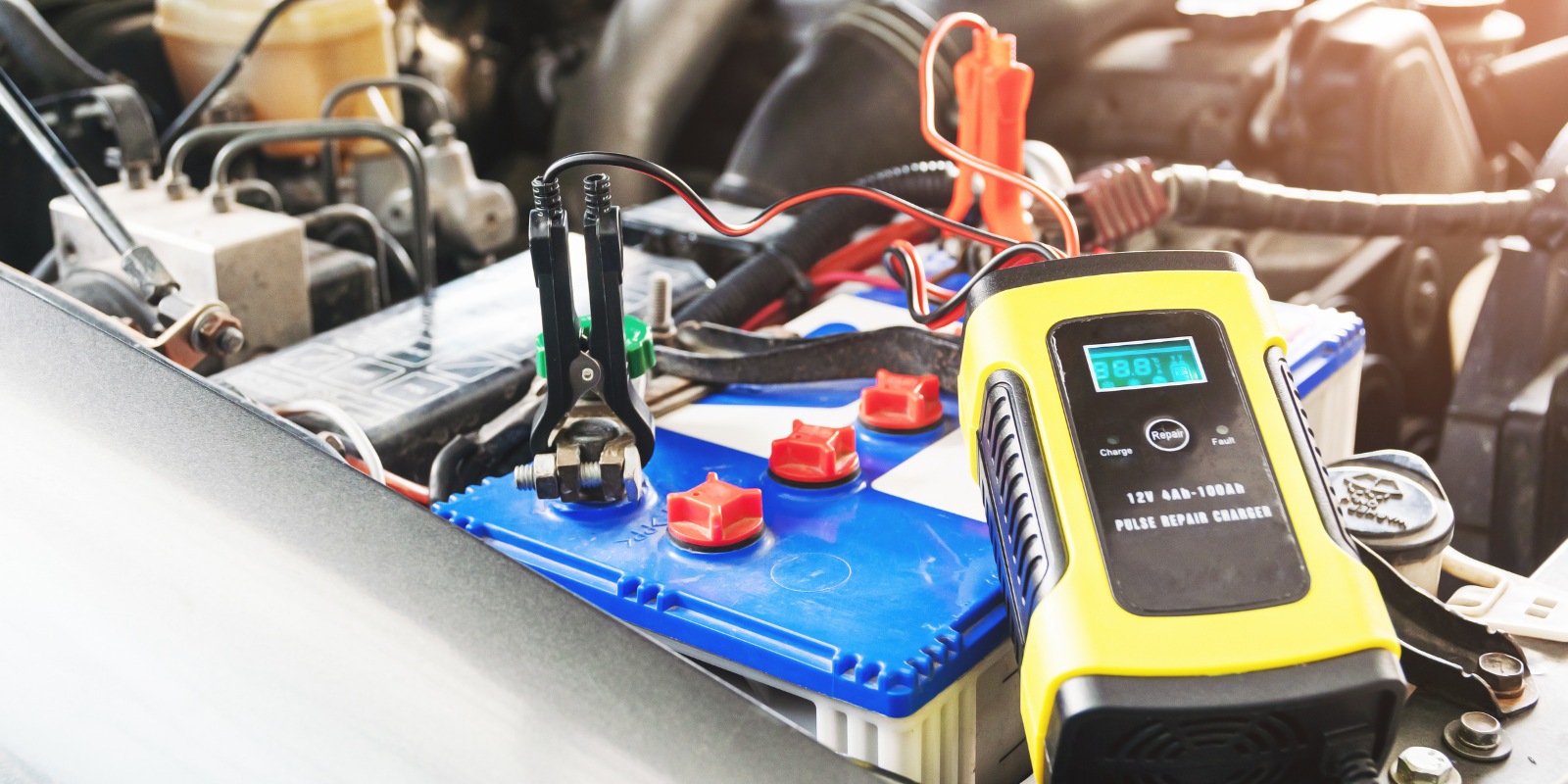
Not every flat battery needs to be replaced. Sometimes a battery that has been deeply discharged — from leaving lights on overnight, a long period of vehicle storage, or a faulty alternator — can be recovered with proper slow charging.
A slow or trickle charge at a low amperage over several hours allows the battery to accept a full charge without the heat build-up that fast charging creates. Fast charging a deeply discharged battery can cause internal damage and shorten its remaining life.
If a battery has been discharged multiple times or is showing low CCA on a load test, charging alone will not restore it to reliable condition. In this case, replacement is the correct decision.
Jump starting is a temporary measure, not a solution. A jump start gets the engine running so the alternator can recharge the battery, but it does not fix the underlying problem. A battery that needed a jump start should be tested and assessed the same day.
Battery Change-Over: What a Professional Service Includes
A professional battery change-over at a qualified garage is more than just swapping the old unit for a new one. It includes:
- Full battery and charging system test before replacement is recommended.
- Correct battery selection — matching the right type, size, and specification to the vehicle.
- Safe removal and terminal cleaning — battery terminals accumulate corrosion that increases resistance and reduces charging efficiency. Terminals are cleaned during every battery change.
- Memory saver or ECU reset procedure — on modern vehicles, disconnecting the battery can reset the engine management system, power window positions, radio presets, and other settings. A professional change-over addresses this appropriately.
- Correct installation and secure fitment — a loose battery in the UAE’s vibration-heavy driving conditions will fail faster. The battery hold-down and tray are checked and secured.
- Post-installation charging system check — confirming the alternator is charging the new battery correctly before the vehicle leaves.
Why Choose Marwat Garage for Battery Service?
We test first, replace only when needed, and fit the correct battery for your specific vehicle — not just the cheapest option on the shelf. Every battery change includes a full charging system check so your new battery gets the long life it deserves.
Frequently Asked Questions
We now have an FAQ list that we hope will help you answer
some of the more common ones.
The cost varies depending on your car’s make, model, and the type of key system it uses. Basic remote key fob programming is affordable, while smart key and proximity key programming for newer vehicles may cost more due to the advanced software required. Call us on +971-564761112 for a specific quote for your car.
In most cases, yes — but it depends on the make and model. Some vehicles require at least one working key to programme a new remote, while others allow a complete key replacement via OBD2 access. Our technicians will advise you after a quick diagnostic check.
If a fresh battery has not solved the problem, your key fob may have lost its synchronisation with the car’s ECU — this is a common issue after a battery change or flat car battery. The fix is a simple reprogramming, which we can do while you wait at our garage in Ajman.
Most key fob programming jobs take between 30 minutes and one hour. Smart key programming for newer models may take slightly longer if it requires extended ECU communication. We will give you an accurate time estimate when you bring in your vehicle.
We can source compatible replacement key fob shells and remotes for most popular vehicle makers sold in the UAE. If you already have a new fob, we can programme it for you. Call ahead to confirm availability for your specific model.
Got a questions?
Pulvinar neque laoreet suspendisse interdum consectetur libero id faucibus nisl. Lectus urna duis convallis convallis tellus.
Schedule Your Appointment Today
Your Automotive Repair & Maintenance Service Specialist