Noises with Car Suspension & Steering
Noises from Your Car's Suspension and Steering — What They Mean and What to Do
Your car communicates. Not through a display or a warning light — but through sounds.
A knock when you brake. A creak when you turn. A grinding hum that appears at a specific speed. A rattle that started after that speed bump last week.
These are not coincidences. Every noise from your suspension and steering system has a cause — and understanding what each sound points to is the first step toward fixing it correctly.
At Marwat Garage Ajman, suspension and steering noise diagnosis is one of our most requested services. This guide covers the most common noises, what causes them, and what to do when you hear them.
Knocking or Clunking Over Bumps
What it sounds like: A sharp, single knock every time you hit a speed bump or pothole. Sometimes felt through the seat or floor as well as heard.
What it usually means:
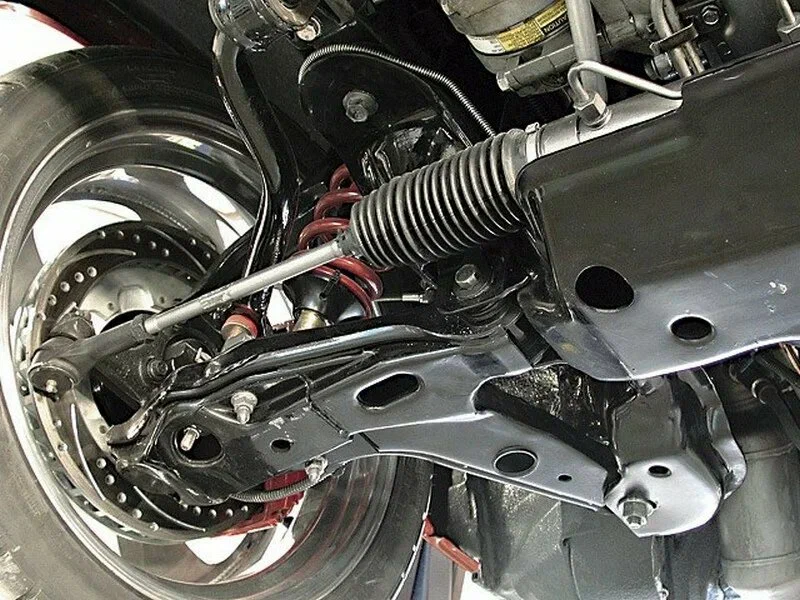
Worn link rods (sway bar links) — the most common cause of this specific symptom. The ball joints at each end of the link rod develop play, producing a sharp knock each time the suspension compresses and rebounds.
Worn shock absorber top mounts — the upper mounting of the shock absorber is a rubber-and-metal bearing. When it wears, it allows the shock absorber to move slightly in its seat, creating a knock on compression or rebound.
Worn control arm bushes — the rubber bushes that mount the control arm to the chassis harden and crack over time, allowing movement and producing a dull knock under suspension load.
Loose suspension components — bolts that have worked loose over time allow components to knock against each other. This is less common but produces similar sounds.
What to do: Have the suspension inspected on a lift. A technician can identify the source by loading and unloading each component individually. Do not guess at this — multiple components can cause the same noise.
Creaking When Turning or on Slow Manoeuvres
What it sounds like: A slow, groaning creak when turning the steering wheel at low speed — in a car park, doing a U-turn, or manoeuvring while stationary.
What it usually means:
Dry or worn suspension bushes — rubber bushes that have dried out, cracked, or worn produce a creaking sound when loaded during steering. Polyurethane or hardened rubber bushes that have lost their lubrication creak particularly at full lock.
Worn ball joints — the ball joint connecting the control arm to the steering knuckle produces a creaking or grinding sound when it has lost lubrication or the joint surface has worn. This can escalate to a knock as the joint deteriorates further.
Dry steering rack — the steering rack’s internal components can produce a creak or groan if the lubricant has degraded. More common on higher-mileage vehicles.
Strut bearing wear — the bearing at the top of the front strut allows the strut to rotate when steering. When it wears, it produces a creaking sound during steering inputs.
What to do: Creaking during steering is not an emergency, but it indicates components that are wearing and should be inspected before the sound escalates into play or knocking.
Other Car Repair Services
- EPS Module Repair
- Steering Rack Repair
- Front Shock Absorber Replacement
- Rear Shock Absorber Replacement
- Suspension Lower Arm Replacement
- Noises with Car Suspension & Steering
- Link Rod Replacement
- Tie Rod End Replacement
- Fuel Pump Replacement
- Gear Box Mounting Replacement
- Front Shocker Mount Replacement
- Engine Mounting Replacement
- Car Wash & Wax
- Premium Top Wash
- Water Pump Replacement
- ECM Repair
- Power Window Repair
- Door Latch Replacement
- Mud Flaps
- Starter Motor Repair
Grinding Sound When Steering
What it sounds like: A rough, grinding sensation and sound when turning — felt through the steering wheel as well as heard.
What it usually means:
Worn CV joint — the constant velocity joint on the front driveshaft allows the wheel to steer and the shaft to transmit power simultaneously. A worn CV joint produces a clicking or grinding sound that is most obvious during tight turns under load.
Worn ball joints reaching end of life — a severely worn ball joint grinds rather than creaks. At this stage, replacement is urgent.
Steering rack internal wear — grinding from within the steering column area on full lock can indicate steering rack wear or damage.
What to do: Grinding sounds during steering warrant prompt inspection. A worn CV joint left unaddressed will fail — which produces a far more significant noise and vibration under acceleration. A severely worn ball joint risks separation.
Vibration or Shimmy Through the Steering Wheel
What it sounds like: Not strictly a noise, but a vibration felt through the steering wheel — either constantly at a specific speed, or specifically when braking.
What it usually means:
Wheel balance — the most common cause of steering wheel vibration at a specific speed. Unbalanced wheels cause a vibration that appears at one speed and disappears above or below it.
Worn tie rod ends — play in the tie rod end allows the wheel to oscillate slightly, feeding vibration back through the steering column.
Warped brake discs — vibration specifically when braking points to disc thickness variation, not a steering component.
Worn wheel bearings — a failing wheel bearing produces a vibration that increases with speed and may be accompanied by a humming sound.
What to do: Identify whether the vibration occurs all the time at speed, or only during braking — this narrows the cause significantly. Wheel balance is always worth checking first, but if balancing does not resolve it, further investigation of steering and brake components is needed.
Humming or Droning That Increases with Speed
What it sounds like: A constant low hum or drone that gets louder as speed increases. Sometimes changes in pitch when the steering wheel is turned slightly.
What it usually means:
Worn wheel bearing — the most common cause of a speed-proportional hum from the suspension area. The tone changes when turning because turning shifts the load from one bearing to the other. The side that quietens when you turn toward it is usually the worn bearing.
Tyre noise — certain tyre wear patterns, particularly cupping or diagonal wear from worn shock absorbers, produce a humming sound that can be confused with a wheel bearing. Road surface changes that affect the sound help distinguish the two.
What to do: A wheel bearing making this sound is in the early stages of failure. It will progress to a louder noise, vibration, and eventually bearing failure — which is a safety hazard at speed. Get it diagnosed and replaced before it reaches that point.
Rattling Over Rough Roads
What it sounds like: A loose rattling sound on rough or uneven surfaces that disappears on smooth roads.
What it usually means:
Worn shock absorber — a shock absorber that has lost its damping ability allows the suspension to bounce excessively, causing components to rattle against each other or their mountings.
Loose heat shield — exhaust heat shields that have corroded or lost their retaining clips rattle over rough roads. The sound comes from underneath the vehicle and is not related to steering input.
Worn anti-roll bar bushes — the rubber bushes that hold the anti-roll bar to the chassis wear and harden, allowing the bar to rattle in its mounting brackets over rough surfaces.
What to do: Distinguish whether the rattle is suspension-related — connected to steering inputs or specific corners of the vehicle — or simply a loose body component underneath. A visual inspection on a lift usually identifies the source immediately.
Why Noise Diagnosis Matters More Than Parts Replacement
The most common mistake with suspension noise is replacing parts without confirming the diagnosis.
Wheel bearing, link rod, bush, ball joint, and CV joint noises can all sound similar to an untrained ear. Replacing the wrong component costs money and leaves the actual problem unresolved.
At Marwat Garage Ajman, noise diagnosis starts with listening to your description, followed by a physical inspection on a lift where components are loaded and checked individually. We identify the source before recommending any replacement — not the other way around.
Suspension Noise in Ajman — Why It Is More Common Here
Ajman’s road network presents specific challenges for suspension components.
Speed bumps are frequent across residential and commercial areas. Every speed bump crossing is a suspension impact — and repeated impacts accelerate wear on link rods, bushes, and shock absorbers significantly compared to smooth highway driving.
Road edges and occasional surface imperfections in some of Ajman’s older industrial roads produce lateral impacts that stress tie rod ends and ball joints.
The extreme heat accelerates rubber deterioration across all suspension bushes and boots — meaning components reach the end of their useful life at lower mileage than manufacturer intervals suggest for cooler climates.
Regular suspension inspection — at least every 20,000 km or whenever a new noise appears — is the most cost-effective approach for vehicles driven in Ajman.
Frequently Asked Questions
We now have an FAQ list that we hope will help you answer
some of the more common ones.
The cost varies depending on your car’s make, model, and the type of key system it uses. Basic remote key fob programming is affordable, while smart key and proximity key programming for newer vehicles may cost more due to the advanced software required. Call us on +971-564761112 for a specific quote for your car.
In most cases, yes — but it depends on the make and model. Some vehicles require at least one working key to programme a new remote, while others allow a complete key replacement via OBD2 access. Our technicians will advise you after a quick diagnostic check.
If a fresh battery has not solved the problem, your key fob may have lost its synchronisation with the car’s ECU — this is a common issue after a battery change or flat car battery. The fix is a simple reprogramming, which we can do while you wait at our garage in Ajman.
Most key fob programming jobs take between 30 minutes and one hour. Smart key programming for newer models may take slightly longer if it requires extended ECU communication. We will give you an accurate time estimate when you bring in your vehicle.
We can source compatible replacement key fob shells and remotes for most popular vehicle makers sold in the UAE. If you already have a new fob, we can programme it for you. Call ahead to confirm availability for your specific model.
Got a questions?
Pulvinar neque laoreet suspendisse interdum consectetur libero id faucibus nisl. Lectus urna duis convallis convallis tellus.
Schedule Your Appointment Today
Your Automotive Repair & Maintenance Service Specialist