Drive-Shaft Service
Vibration Through Your Seat at 80 km/h Is Not Normal — Drive Shaft Service in Ajman
You are cruising on Sheikh Mohammed Bin Zayed Road and somewhere around 80 to 100 km/h, a vibration starts buzzing through your seat and floor. You slow down — it fades. You speed up — it comes back. Or maybe it is a clunk every time you pull away from a traffic light, a knock that follows the rhythm of your acceleration.
Both of these are classic drive shaft symptoms. And both of them tend to get worse, never better, until the shaft is properly inspected and repaired.
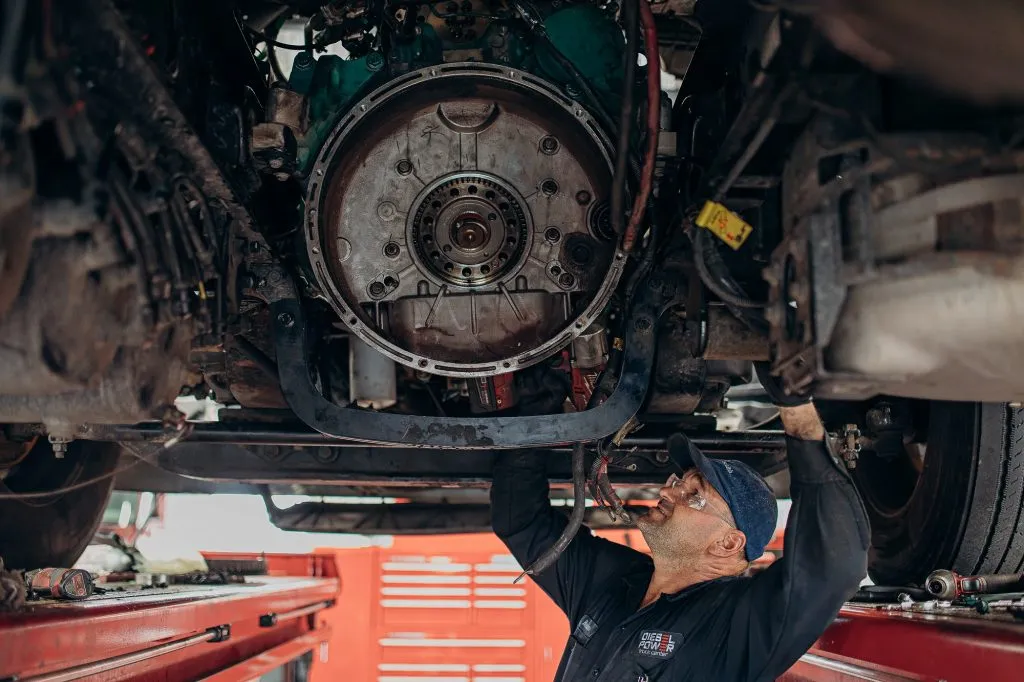
The drive shaft is the rotating assembly that carries engine torque from your gearbox to the driven wheels — particularly on rear-wheel-drive, four-wheel-drive, and all-wheel-drive vehicles where the engine and rear axle are separated by a significant distance. It is a precision-balanced, high-speed component. When something goes wrong with it — a worn universal joint, a damaged centre bearing, a bent shaft, or a failed slip joint — the consequences range from annoying vibration to a complete and sudden loss of drive on a UAE motorway.
Drive Shaft vs CV Axle — An Important Distinction
Feature / Component | CV Axle | Drive Shaft (Propeller Shaft) |
Purpose | Connects gearbox to front or rear wheel hubs | Connects gearbox or transfer case to rear differential (or front & rear on AWD) |
Application | Vehicles where engine and driven wheels are close together | Rear-wheel-drive, 4WD, or AWD vehicles with distant differentials |
Joints Used | CV (Constant Velocity) joints for tight, changing angles | Universal joints (U-joints) and centre support bearing for longer shafts |
Rotation & Speed | Handles shorter distances, lower rotational speeds | Longer shafts, rotate at higher speeds |
Support | Direct connection, no centre bearing | Often includes centre support bearing on two-piece shafts |
Common UAE Vehicles | Front-wheel-drive sedans, small SUVs | Toyota Land Cruiser, Nissan Patrol, Mitsubishi Pajero, Ford Explorer, GMC Yukon, Toyota Hilux, Nissan Navara, RWD sedans/coupes from BMW, Mercedes-Benz, etc. |
Identification Tip | Pulls from front wheels only | Rear-wheel-drive or live rear axle vehicles have drive shaft |
Note | Separate service page available | If unsure, call Marwat Garage Ajman for confirmation |
What Goes Wrong and How to Recognise It
Drive shaft problems have distinct patterns depending on which component has failed. Understanding these patterns helps you describe your symptoms accurately and helps our technicians reach the right diagnosis faster.
Universal joint (U-joint) wear:
U-joints are cross-shaped steel assemblies with needle bearings at each tip. They allow the drive shaft to change angle as the suspension moves. Over time — especially with infrequent lubrication or aggressive off-road use in the UAE’s desert terrain — the needle bearings dry out, develop rust, and begin to seize. The result is a clunking or knocking that you feel through the drivetrain during acceleration and deceleration, a vibration that is worst at low speeds, and sometimes a metallic squeak when moving from a standstill. A U-joint that seizes completely can fracture, causing the drive shaft to drop — a dangerous failure at any speed.
Centre support bearing failure:
Two-piece drive shafts use a rubber-mounted bearing at the midpoint to support the shaft’s weight and reduce vibration. This rubber mount hardens and cracks with age and UAE heat exposure. When it fails, the shaft runs off-centre at speed, producing a vibration that typically appears in a specific speed range — often 70 to 100 km/h — and may disappear above or below that range. Many drivers mistake this for a tyre balance issue because the speed-range pattern is similar.
Bent or damaged shaft:
A drive shaft that has been bent — by a severe kerb strike, an off-road impact, or a previous failed U-joint that was driven on — runs out of round and produces vibration at virtually all speeds above 60 km/h. Straightening is sometimes possible on specialist equipment; replacement is often the more reliable and cost-effective solution.
Slip joint or spline wear:
Drive shafts incorporate a sliding section — the slip joint — that allows the shaft length to change as the suspension moves. The splines inside this joint can wear smooth over high mileage, causing a knock or clunk that happens specifically during the transition between acceleration and coasting.
Other Car Repair Services
- - Engine Performance Service (Diagnostics)
- - Standard & Electronic Ignition Systems
- - Fuel Injection Service & Component Analysis
- - Emission Controls
- - Pattern Failure Analysis
- - Fuel Pump Service (Mechanical & Electric)
- - Carburetor Rebuilding & Set-Up Service
- - Fuel Tank Replacement & Services
- - Gas Gauge & Fuel Tank Sending Unit Service
- - Fuel Injector Diagnostic & Cleaning Service
- - Throttle Body Repairs & Clean And Service
- - Vacuum Leaks Diagnosed W/ Smoke Detection
- - Engine Replacement Service
- - Engine Repairing Service
- - Timing Chain & Timing Belt Service
- - Valve Work, Valve Grinding, And Cylinder Head Repairs
- - Engine Oil Leaks: Diagnose, Clean, And Recommended Repairs
- - Internal Gaskets Replacements
- - Front & Rear CV (Constant Velocity) Axle Service & Boot Service
- - Differential Repairs (Both Front & Rear Trans-Axle & Conventional)
- - Drive-Shaft Service
- - Suspension Inspection & Service
- - Wheel Alignment (Front & Rear)
- - Tire Rotation Service
- - Power Steering Repairs
- - Power Steering Flush Service
- - Wheel Bearing Replacements
How We Diagnose a Drive Shaft Problem at Marwat Garage
- Several unrelated issues can mimic drive shaft problems, including:
- Worn differential
- Failing gearbox mount
- Unbalanced tyres
- Loose exhaust hangers
- Our approach prevents unnecessary part replacements by following a structured diagnosis:
- Road Test:
- Assess at what speeds the vibration occurs
- Check if it changes with acceleration or coasting
- Determine if it appears in all gears or specific ones
- Observe whether steering input affects the vibration
- Lift Inspection:
- Rotate the drive shaft by hand to detect roughness, binding, or excessive play in U-joints
- Inspect joint caps for rust or corrosion, indicating dried-out needle bearings
- Examine the centre bearing mount for cracking or collapse
- Check the shaft for straightness and runout visually by slow rotation
- Flange & Mount Check:
- Inspect gearbox and differential flanges where the shaft bolts
- Look for worn flange bolts or damaged flanges, which can mimic drive shaft issues
- Road Test:
- This thorough diagnostic process ensures accurate identification of the root cause, saving time, money, and avoiding unnecessary replacements.
Repair Options — Matched to the Actual Fault
Drive shaft repair is not one-size-fits-all. The correct repair depends entirely on which component has failed and the overall condition of the shaft.
- U-joint replacement is the most common drive shaft repair. The old joint is pressed out using a hydraulic press — not improvised with hammers that damage the yoke — and a quality replacement joint is pressed in and secured correctly. On vehicles with grease nipples, we lubricate the new joint as part of the job.
- Centre bearing replacement involves dropping the drive shaft, splitting the two-piece assembly at the centre, pressing out the old bearing, fitting a quality replacement bearing and rubber mount, and reassembling the shaft to the correct alignment angle before reinstallation.
- Drive shaft balancing is performed when vibration persists after mechanical repairs, or when a shaft is suspected of being slightly out of balance from a previous repair or a minor bend. We use specialist balancing equipment to identify the heavy spot and correct it — the same principle as wheel balancing, applied to the rotating shaft assembly.
- Full shaft replacement is recommended when the shaft is bent beyond correction, when multiple components have failed simultaneously, or when a quality remanufactured or new shaft is more cost-effective than individual component repairs on a high-mileage original shaft.
Drive Shaft Health and UAE Driving Conditions
Several aspects of driving in Ajman and the wider UAE place specific stress on drive shafts that drivers may not consider.
Off-road excursions into desert terrain — common among Land Cruiser, Patrol, and Pajero owners in the UAE — subject drive shafts to extreme articulation angles and impact loads. U-joints on vehicles used off-road should be inspected more frequently than standard service intervals suggest.
The UAE’s extensive motorway network means drive shafts on vehicles like the GMC Yukon or BMW 5 Series regularly rotate at high speeds for extended periods. A centre bearing that is beginning to fail may not produce noticeable symptoms during city driving but becomes immediately apparent on a motorway run.
And like CV boots, drive shaft U-joint seals and centre bearing rubber mounts degrade faster in the UAE’s heat. A bearing that shows no symptoms at 50,000 km can deteriorate rapidly between inspections in extreme summer conditions.
Pricing and What to Expect at Marwat Garage
Drive shaft service costs vary based on the repair required, the vehicle make and model, and whether the shaft is a single-piece or two-piece design. A U-joint replacement on a common Japanese 4×4 is considerably less expensive than a full shaft replacement on a European rear-wheel-drive vehicle. We never quote a repair until we have confirmed the fault.
What every customer receives at Marwat Garage:
A clear written quote after diagnosis, with parts and labour itemised separately. No work begins without your approval. If we find additional faults during the job — a worn flange bolt, a leaking differential seal at the shaft connection point — we call you before proceeding, not after. And every drive shaft repair is followed by a road test to verify the vibration or noise is completely resolved.
Frequently Asked Questions
We now have an FAQ list that we hope will help you answer
some of the more common ones.
The cost varies depending on your car’s make, model, and the type of key system it uses. Basic remote key fob programming is affordable, while smart key and proximity key programming for newer vehicles may cost more due to the advanced software required. Call us on +971-564761112 for a specific quote for your car.
In most cases, yes — but it depends on the make and model. Some vehicles require at least one working key to programme a new remote, while others allow a complete key replacement via OBD2 access. Our technicians will advise you after a quick diagnostic check.
If a fresh battery has not solved the problem, your key fob may have lost its synchronisation with the car’s ECU — this is a common issue after a battery change or flat car battery. The fix is a simple reprogramming, which we can do while you wait at our garage in Ajman.
Most key fob programming jobs take between 30 minutes and one hour. Smart key programming for newer models may take slightly longer if it requires extended ECU communication. We will give you an accurate time estimate when you bring in your vehicle.
We can source compatible replacement key fob shells and remotes for most popular vehicle makers sold in the UAE. If you already have a new fob, we can programme it for you. Call ahead to confirm availability for your specific model.
Got a questions?
Pulvinar neque laoreet suspendisse interdum consectetur libero id faucibus nisl. Lectus urna duis convallis convallis tellus.
Schedule Your Appointment Today
Your Automotive Repair & Maintenance Service Specialist