
Engine Mounting Replacement
Stop the Shake — Professional Engine Mounting Replacement in Ajman
If your car has started to vibrate unusually at idle, clunk when you accelerate, or feel rough in a way that was not there before, the engine mountings deserve serious investigation. Engine mountings are the components that secure your engine to the vehicle’s chassis — and when they wear out or fail, the consequences go beyond discomfort. A failing engine mounting can cause damage to surrounding components, affect driveability, and in serious cases, create safety risks.
At Marwat Garage Ajman, we provide a professional engine mounting replacement service that eliminates vibration, restores correct engine positioning, and protects the surrounding components from the stress caused by loose or collapsed mountings. Our technicians diagnose mounting faults accurately, replace the relevant mounting with quality components, and verify correct engine alignment before the vehicle is returned.
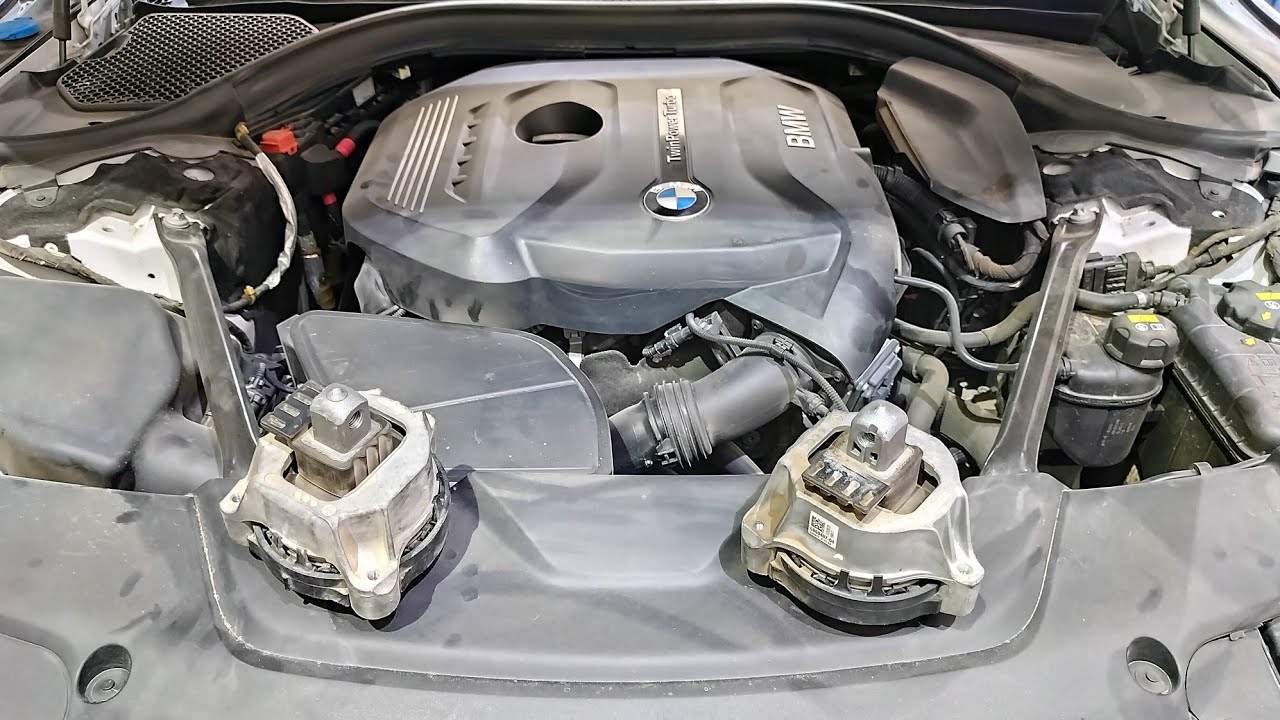
What Engine Mountings Do and Why They Fail
Engine mountings — also called motor mounts — are brackets that attach the engine (and in most vehicles, the transmission) to the vehicle’s chassis or subframe. Their job is to perform two opposing functions simultaneously, which is what makes them such a well-engineered component.
- They hold the engine in place — The engine is a heavy, powerful component. Without secure mountings, it would shift under acceleration and braking forces, stretching or breaking the hoses, cables, and driveshafts connected to it.
- They absorb and isolate vibration — An internal combustion engine generates vibration constantly as pistons fire and rotate. Without vibration isolation, this vibration would transmit directly through the chassis to every surface in the car — making the steering wheel shake, the seats vibrate, and the interior fill with mechanical noise.
Engine mountings achieve both of these functions through a combination of steel brackets and rubber isolation elements bonded together. The steel provides structural strength to hold the engine securely. The rubber absorbs and dampens the vibration before it can transmit to the chassis.
The rubber element is what wears and fails over time. In the UAE’s climate, rubber degrades faster than in cooler environments. Ajman’s extreme heat causes rubber to become hard, crack, and lose its elasticity significantly faster than the manufacturers’ estimates, which are typically based on European or North American climate conditions. The result is engine mounting failure that often occurs earlier than expected on vehicles driven in the UAE.
Warning Signs of Worn or Failed Engine Mountings
Recognising the symptoms of failing engine mountings allows you to address the problem before it causes further damage. At Marwat Garage Ajman, we see these symptoms regularly and diagnose them quickly.
- Excessive vibration at idle — When an engine mounting’s rubber element has hardened or cracked, it no longer absorbs the engine’s idle vibration effectively. You feel this as an unusual shake through the steering wheel, the gear lever, the seat, or the floor — particularly noticeable when the car is stationary with the engine running.
- Clunking or banging noise during acceleration or braking — When you accelerate from a standstill or brake firmly, the engine rocks on its mountings under the torque load. Worn or collapsed mountings allow the engine to move excessively in this rocking motion, causing a clunk or bang as it reaches the limits of its movement and contacts the chassis or surrounding components.
- Vibration that changes with gear selection — When you shift from Park or Neutral into Drive or Reverse, a worn engine mounting often produces a noticeable thud or increased vibration. This torque-induced movement is a classic sign of mounting deterioration.
- Visible engine movement — In some vehicles, you can observe the engine moving excessively during acceleration by watching it from the engine bay. An engine that visibly lurches when revved is operating with insufficient mounting support.
- Increased cabin noise — As mountings lose their vibration-damping ability, more mechanical noise from the engine transmits through the chassis into the cabin. You may notice increased engine noise at certain speeds or RPM ranges that was not previously present.
- Damage to engine hoses and cables — Excessive engine movement from failed mountings places stress on the hoses, wiring harnesses, and cables connected to the engine. Hoses can crack or pull loose, and wiring can chafe against nearby components. If you are finding unexplained hose or wiring damage, worn engine mountings may be the underlying cause.
Other Car Repair Services
- EPS Module Repair
- Steering Rack Repair
- Front Shock Absorber Replacement
- Rear Shock Absorber Replacement
- Suspension Lower Arm Replacement
- Noises with Car Suspension & Steering
- Link Rod Replacement
- Tie Rod End Replacement
- Fuel Pump Replacement
- Gear Box Mounting Replacement
- Front Shocker Mount Replacement
- Engine Mounting Replacement
- Car Wash & Wax
- Premium Top Wash
- Water Pump Replacement
- ECM Repair
- Power Window Repair
- Door Latch Replacement
- Mud Flaps
- Starter Motor Repair
Types of Engine Mountings
Modern vehicles use several types of engine mountings, depending on the vehicle design and its performance requirements. Understanding these helps explain why some mounting replacements are more complex than others.
- Standard rubber mounts — The most common type, consisting of steel brackets bonded to rubber isolation elements. Straightforward to replace when worn, and reliable over a long service life in normal conditions.
- Hydraulic mounts — Found on many mid-range and premium vehicles, hydraulic mounts use a fluid-filled chamber within the rubber element to provide variable damping — they absorb vibration more effectively than solid rubber mounts across a wider range of engine speeds and conditions. When hydraulic mounts fail, they typically leak their internal fluid and collapse, resulting in sudden and severe vibration.
- Electronic active mounts — Found on some newer vehicles, these mounts use electronically controlled actuators to actively cancel engine vibration. When they fail, the vehicle’s ECU usually generates a fault code. Diagnosis involves both mechanical and electronic assessment.
At Marwat Garage Ajman, our technicians work with all mounting types across the full range of vehicles popular in the UAE, and we diagnose which mounting type your vehicle uses and what replacement it requires.
How Many Engine Mountings Does a Vehicle Have?
Most vehicles have two to four engine mountings, with the exact number depending on the vehicle’s engine layout and drivetrain configuration.
- Front-wheel drive vehicles — Typically have a front mount, a rear mount (also called a torque mount or dog bone mount), and one or two side mounts. The torque mount on front-wheel drive vehicles takes significant load under acceleration and is often the first to fail.
- Rear-wheel drive vehicles — Typically use two mounts — one on each side of the engine — positioned to support the engine symmetrically. The transmission also has its own separate mounting.
- Four-wheel drive and AWD vehicles — Common across the UAE’s large SUV fleet, these vehicles have engine mounts for the engine and separate transmission mounts for the gearbox and transfer case. All mounts should be inspected when any one mount shows signs of failure, as they age together.
At Marwat Garage Ajman, we inspect all engine and transmission mountings when any one mount is identified as faulty. Replacing only the obviously failed mount while leaving degraded adjacent mounts risks a repeat visit in a short time.
Our Engine Mounting Replacement Process
Every engine mounting replacement at Marwat Garage Ajman follows a structured, thorough process.
Full Mounting Inspection and Diagnosis
We inspect all engine and transmission mountings — checking the rubber elements for cracking, collapse, and separation from the steel brackets, and checking the steel components for corrosion or deformation. We identify which mounting or mountings are causing the symptoms and which adjacent mounts are also approaching the end of their service life.
Engine Support During Replacement
Replacing an engine mounting requires temporarily supporting the engine weight so the mounting can be removed and the new one fitted. We use proper engine support equipment to hold the engine safely during this process, preventing any movement or strain on surrounding components.
Quality Mount Installation
We fit quality replacement mountings suited to your vehicle’s make, model, and engine type. The new mounting is torqued to specification and the engine is lowered back onto it correctly.
Verification and Road Test
After mounting replacement, we verify that the engine is sitting in its correct position and that all surrounding components — hoses, wiring, driveshafts, and ancillaries — are correctly positioned and undamaged. A road test confirms that the vibration, clunking, and noise symptoms have been resolved.
Why UAE Temperatures Accelerate Mounting Wear
Rubber degrades significantly faster at high temperatures. In Ajman’s summer, engine bay temperatures regularly exceed 80°C during operation. This continuous thermal stress accelerates the hardening and cracking of the rubber elements in engine mountings — often causing them to fail in six to eight years on vehicles in the UAE, compared to ten or more years in cooler climates.
Car owners in Ajman whose vehicles are approaching this age, or who have noticed any of the vibration or noise symptoms described above, should have their engine mountings inspected promptly.
Frequently Asked Questions
We now have an FAQ list that we hope will help you answer
some of the more common ones.
The cost varies depending on your car’s make, model, and the type of key system it uses. Basic remote key fob programming is affordable, while smart key and proximity key programming for newer vehicles may cost more due to the advanced software required. Call us on +971-564761112 for a specific quote for your car.
In most cases, yes — but it depends on the make and model. Some vehicles require at least one working key to programme a new remote, while others allow a complete key replacement via OBD2 access. Our technicians will advise you after a quick diagnostic check.
If a fresh battery has not solved the problem, your key fob may have lost its synchronisation with the car’s ECU — this is a common issue after a battery change or flat car battery. The fix is a simple reprogramming, which we can do while you wait at our garage in Ajman.
Most key fob programming jobs take between 30 minutes and one hour. Smart key programming for newer models may take slightly longer if it requires extended ECU communication. We will give you an accurate time estimate when you bring in your vehicle.
We can source compatible replacement key fob shells and remotes for most popular vehicle makers sold in the UAE. If you already have a new fob, we can programme it for you. Call ahead to confirm availability for your specific model.
Got a questions?
Pulvinar neque laoreet suspendisse interdum consectetur libero id faucibus nisl. Lectus urna duis convallis convallis tellus.
Schedule Your Appointment Today
Your Automotive Repair & Maintenance Service Specialist