
Transmission Fluid Service
Transmission Fluid Service: Why It Matters and When to Do It in the UAE
Most car owners in the UAE stay on top of engine oil changes. But when was the last time you thought about your transmission fluid?
For many drivers, the answer is never. And that is a costly mistake.
Your transmission is one of the most complex and expensive components in your vehicle. It controls how power moves from the engine to the wheels — managing gear shifts, torque delivery, and drivetrain efficiency every single time you drive. The fluid inside it is what keeps all of that working smoothly. When that fluid breaks down, the damage builds quietly — until a gear slips, a shudder appears, or the transmission stops working altogether.
In the UAE’s extreme heat, transmission fluid degrades faster than in any temperate climate. Understanding transmission fluid service — what it is, when it is needed, and what happens when it is neglected — can save you from one of the most expensive repairs a car can need.
What Is Transmission Fluid and What Does It Do?
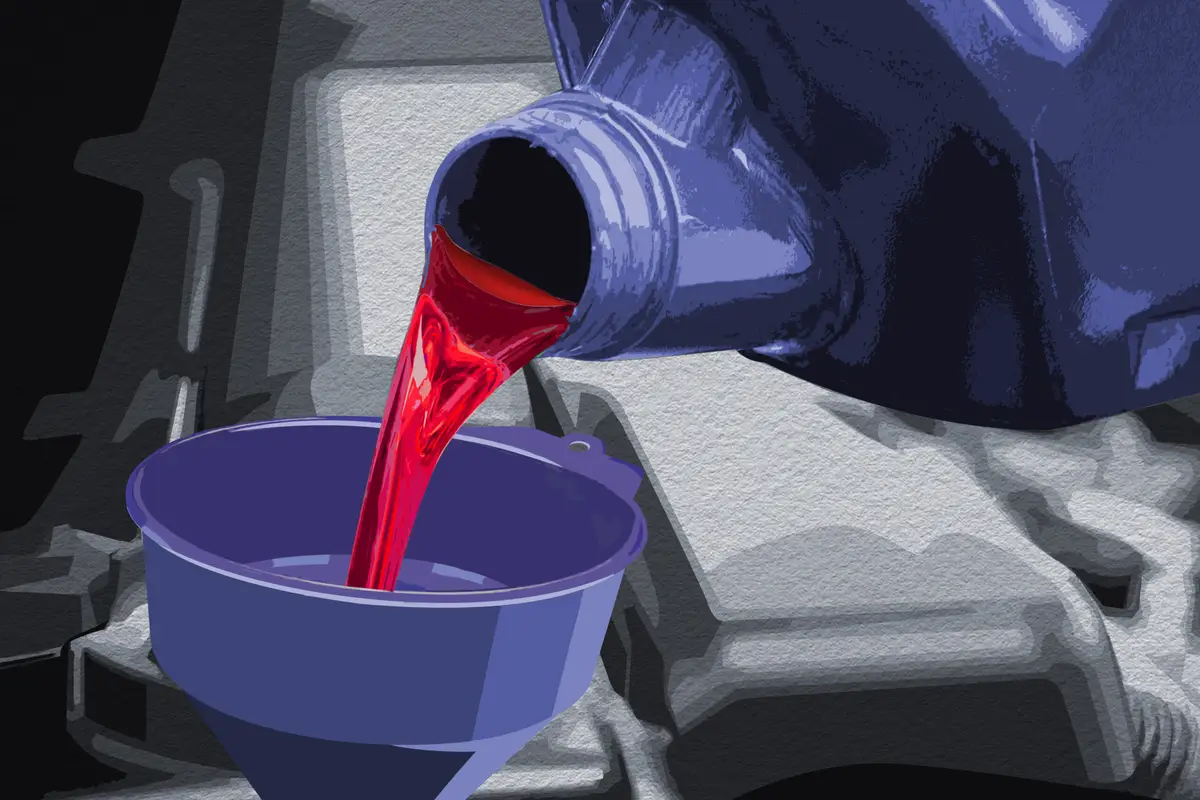
Transmission fluid is a specially formulated oil that serves multiple functions inside your gearbox simultaneously.
- Lubrication. The transmission contains dozens of precision metal components — gears, shafts, bearings, clutch packs, and planetary sets — all moving at high speed and under significant load. Transmission fluid lubricates every contact surface, preventing metal-to-metal wear.
- Hydraulic pressure. In automatic transmissions, fluid is the medium through which gear changes actually happen. The transmission control unit signals hydraulic valves to direct fluid pressure to specific clutch packs, which engage and disengage to produce gear shifts. Without correct fluid pressure — which requires clean, properly viscous fluid — gear changes become rough, slow, or impossible.
- Cooling. Transmission fluid absorbs heat generated by friction and transfers it away from critical components. Many vehicles route transmission fluid through a cooler — either a separate unit or integrated into the radiator — to manage operating temperature. Degraded fluid loses its ability to carry heat effectively, causing transmission temperatures to rise.
- Cleaning. Good transmission fluid contains detergent additives that keep internal components clean and prevent varnish and sludge from forming on valves and passages.
- Friction modification. Automatic transmission fluid (ATF) contains carefully balanced friction modifiers that allow clutch packs to engage smoothly and consistently. As fluid ages, these modifiers break down — contributing to rough, delayed, or shuddering gear changes.
How UAE Heat Affects Transmission Fluid
Every fluid in your vehicle suffers under the UAE’s extreme temperatures — and transmission fluid is no exception.
Transmission fluid operates at high temperatures even in normal conditions. Inside an automatic gearbox under load, fluid temperatures regularly reach 80°C to 100°C. In stop-start traffic in Ajman during summer — with the AC running at full blast adding load to the engine and drivetrain — fluid temperatures climb even higher.
Heat causes transmission fluid to oxidise. Oxidised fluid darkens in colour, thickens, loses its viscosity characteristics, and forms sludge and varnish deposits on the delicate hydraulic valves and passages inside the transmission. These deposits restrict fluid flow, interfere with pressure regulation, and cause the erratic gear shifts and shuddering that signal a transmission in trouble.
Heat also destroys the friction modifiers and detergent additives in the fluid far faster than the manufacturer’s standard service interval assumes. Most transmission service intervals published in owner manuals were developed for temperate climates. In the UAE, those intervals need to be shortened.
Other Car Repair Services
- Minor 5000 Km Service
- Routine 7000 KM Service
- Windshield Wipers
- CV (Constant Velocity) Maintenance
- Major 10,000 KM Service
- Belts & Hoses
- Vehicle Value & Car Pricing Service
- Headlight Aiming
- Battery Change-Over & Charging
- 7,500, 15k, 30k, & 60k Km Maintenance
- Transmission Fluid Service
- Lighting (Bulb Replacement)
- Cooling System Flush & Exchange
How UAE Heat Affects Transmission Fluid
Every fluid in your vehicle suffers under the UAE’s extreme temperatures — and transmission fluid is no exception.
Transmission fluid operates at high temperatures even in normal conditions. Inside an automatic gearbox under load, fluid temperatures regularly reach 80°C to 100°C. In stop-start traffic in Ajman during summer — with the AC running at full blast adding load to the engine and drivetrain — fluid temperatures climb even higher.
Heat causes transmission fluid to oxidise. Oxidised fluid darkens in colour, thickens, loses its viscosity characteristics, and forms sludge and varnish deposits on the delicate hydraulic valves and passages inside the transmission. These deposits restrict fluid flow, interfere with pressure regulation, and cause the erratic gear shifts and shuddering that signal a transmission in trouble.
Heat also destroys the friction modifiers and detergent additives in the fluid far faster than the manufacturer’s standard service interval assumes. Most transmission service intervals published in owner manuals were developed for temperate climates. In the UAE, those intervals need to be shortened.
Types of Transmission Fluid
Not all transmission fluids are the same. Using the wrong type in your vehicle can cause immediate damage.
Automatic Transmission Fluid (ATF)
ATF is used in conventional automatic gearboxes and is the most common type in the UAE market. Several different ATF specifications exist — Dexron, Mercon, ATF+4, and others — and these are not universally interchangeable. Using the wrong ATF specification in a modern automatic transmission can damage clutch packs and hydraulic components.
CVT Fluid
Continuously Variable Transmissions (CVT) use a belt-and-pulley system instead of traditional gears. They require a dedicated CVT fluid with specific friction characteristics designed for metal or rubber belt operation. Standard ATF must never be used in a CVT — it will cause rapid belt wear and transmission failure.
DCT Fluid
Dual-Clutch Transmissions (DCT) use two separate clutch packs and require fluid specifically formulated for wet-clutch dual-clutch operation. DCT fluid is different from both standard ATF and manual transmission fluid.
Manual Transmission Fluid
Manual gearboxes use gear oil rather than ATF. The viscosity and additive package is designed for the sliding and meshing action of manual gear sets rather than the hydraulic and friction-modifying demands of automatic systems.
Always use the exact fluid specification stated in your vehicle’s owner manual or confirmed by a qualified mechanic. In the UAE market, many service centres cut corners by using a generic ATF across multiple vehicle types. This is a false economy that shortens transmission life significantly.
Signs Your Transmission Fluid Needs Servicing
Your transmission will give you clear signals when the fluid is due for attention. Do not ignore them.
- Delayed or hesitant gear engagement. When you shift from Park to Drive or Reverse, the gear should engage smoothly within a second. A noticeable delay — the engine revs but the car does not move immediately — points to hydraulic pressure problems caused by degraded or low fluid.
- Rough, jerky, or shuddering gear shifts. Smooth gear changes are the benchmark of a healthy automatic transmission. If shifts feel abrupt, cause a shudder through the vehicle, or the transmission seems to hunt between gears, worn fluid is a likely cause.
- Slipping gears. The engine revs rise but vehicle speed does not increase proportionally — as if the transmission is momentarily losing its grip. This is a serious symptom that needs immediate attention.
- Unusual noises. Whining, humming, or clunking sounds from the transmission area, especially during gear changes or under load, indicate internal wear that is often linked to inadequate lubrication.
- Dark, burnt-smelling fluid. Healthy transmission fluid is typically red or pink and has a slightly sweet smell. Fluid that has turned dark brown or black and smells burnt has oxidised severely and needs immediate replacement — along with an inspection of the transmission for internal damage.
- Transmission warning light. Many modern vehicles have a dedicated transmission temperature or fault warning light. If this illuminates, the vehicle should be checked without delay.
- Fluid leaks. Transmission fluid leaking from gaskets, seals, or the transmission pan is both a sign of a maintenance issue and a cause of future damage as fluid level drops.
What Does a Transmission Fluid Service Include?
A proper transmission fluid service at a qualified garage covers the following:
Fluid Condition and Level Check
The fluid is inspected for colour, consistency, smell, and level. This gives an immediate indication of the fluid’s condition and whether any internal contamination — metal particles, clutch material — is present.
Drain and Refill
The transmission pan is drained and the old fluid is removed. On many vehicles, a simple drain and refill only removes 40% to 60% of the total fluid volume — the remainder stays in the torque converter and hydraulic passages. This is still beneficial and far better than no service at all.
Transmission Flush (Where Appropriate)
A full transmission flush uses specialised equipment to circulate new fluid through the entire system, pushing the old fluid out completely. This achieves a full fluid exchange rather than a partial one. Whether a flush is appropriate depends on the vehicle’s age, current fluid condition, and transmission type. A flush on a very high-mileage transmission with severely degraded fluid can sometimes disturb deposits that were acting as seals — so a qualified mechanic’s assessment of suitability is essential before flushing.
Filter Replacement
Many automatic transmissions have an internal filter that traps metal particles and debris from normal wear. This filter is replaced during a full transmission service. A clogged filter restricts fluid flow and reduces hydraulic pressure — contributing directly to the shift quality problems described above.
Pan Gasket Inspection and Replacement
When the transmission pan is removed for filter access, the gasket is inspected and replaced if it shows signs of wear or leakage.
Correct Fluid Refill
The transmission is refilled with the exact fluid specification required for that vehicle — the correct type, grade, and volume as specified by the manufacturer. The fluid level is then verified using the correct procedure for that transmission type.
Road Test
After the service, the vehicle is road tested to confirm smooth gear engagement, correct shift timing, and the absence of any shudder, slip, or unusual noise.
How Often Should You Service Transmission Fluid in the UAE?
Manufacturer service intervals for transmission fluid vary widely — some state every 40,000 KM, others claim “lifetime fill” with no scheduled change.
In the UAE, these intervals should be treated with caution. “Lifetime fill” transmissions do benefit from fluid changes in extreme climates — the fluid degrades with heat regardless of what the label says, and the cost of a fluid change is incomparably less than the cost of a transmission rebuild or replacement.
As a general guideline for UAE driving conditions:
- Conventional automatic transmissions — service every 40,000 to 60,000 KM, or every 2 to 3 years
- CVT transmissions — service every 40,000 KM given the precision nature of CVT components and their sensitivity to fluid condition
- DCT transmissions — follow manufacturer guidance closely, typically every 40,000 to 60,000 KM
- Manual transmissions — gear oil change every 50,000 to 80,000 KM
Vehicles used predominantly in heavy city traffic, towing, or driven aggressively should be serviced at the shorter end of these ranges.
The Real Cost of Neglecting Transmission Fluid
Transmission fluid service is one of the most cost-effective maintenance items on any vehicle. The fluid and labour cost is modest. The alternative — a transmission that has suffered internal damage from degraded fluid — is not.
Automatic transmission rebuilds in the UAE can cost AED 4,000 to AED 15,000 or more depending on the vehicle. CVT replacements are frequently even more expensive. A remanufactured or second-hand transmission carries additional cost and uncertainty.
In almost every case, the damage that leads to these repairs began with neglected fluid — fluid that was overdue for replacement, wrong for the vehicle, or at a dangerously low level due to an undetected leak.
Regular transmission fluid service is not a cost. It is an investment in protecting one of the most expensive components in your car.
Why Choose Marwat Garage for Transmission Fluid Service?
We use the correct fluid specification for your vehicle — not a generic substitute. Every service includes a fluid condition assessment, correct filter replacement where applicable, and a road test before handover. We diagnose before we recommend, and we explain exactly what your transmission needs and why.
Frequently Asked Questions
We now have an FAQ list that we hope will help you answer
some of the more common ones.
The cost varies depending on your car’s make, model, and the type of key system it uses. Basic remote key fob programming is affordable, while smart key and proximity key programming for newer vehicles may cost more due to the advanced software required. Call us on +971-564761112 for a specific quote for your car.
In most cases, yes — but it depends on the make and model. Some vehicles require at least one working key to programme a new remote, while others allow a complete key replacement via OBD2 access. Our technicians will advise you after a quick diagnostic check.
If a fresh battery has not solved the problem, your key fob may have lost its synchronisation with the car’s ECU — this is a common issue after a battery change or flat car battery. The fix is a simple reprogramming, which we can do while you wait at our garage in Ajman.
Most key fob programming jobs take between 30 minutes and one hour. Smart key programming for newer models may take slightly longer if it requires extended ECU communication. We will give you an accurate time estimate when you bring in your vehicle.
We can source compatible replacement key fob shells and remotes for most popular vehicle makers sold in the UAE. If you already have a new fob, we can programme it for you. Call ahead to confirm availability for your specific model.
Got a questions?
Pulvinar neque laoreet suspendisse interdum consectetur libero id faucibus nisl. Lectus urna duis convallis convallis tellus.
Schedule Your Appointment Today
Your Automotive Repair & Maintenance Service Specialist