Front Brake Discs
Front Brake Discs: What Every Driver in Ajman Needs to Know
When it comes to vehicle safety, few components carry as much responsibility as your braking system. And at the heart of that system — doing the heavy lifting every single time you slow down or stop — are your front brake discs.
Most drivers are aware of brake pads, but the disc itself is often overlooked until something goes seriously wrong. At Marwat Garage Ajman, we believe an informed driver is a safer driver. So whether you’ve noticed something unusual when braking, or you simply want to understand your vehicle better, this guide covers everything you need to know about front brake discs — how they work, when they wear out, and what to do about it.
What Are Front Brake Discs?
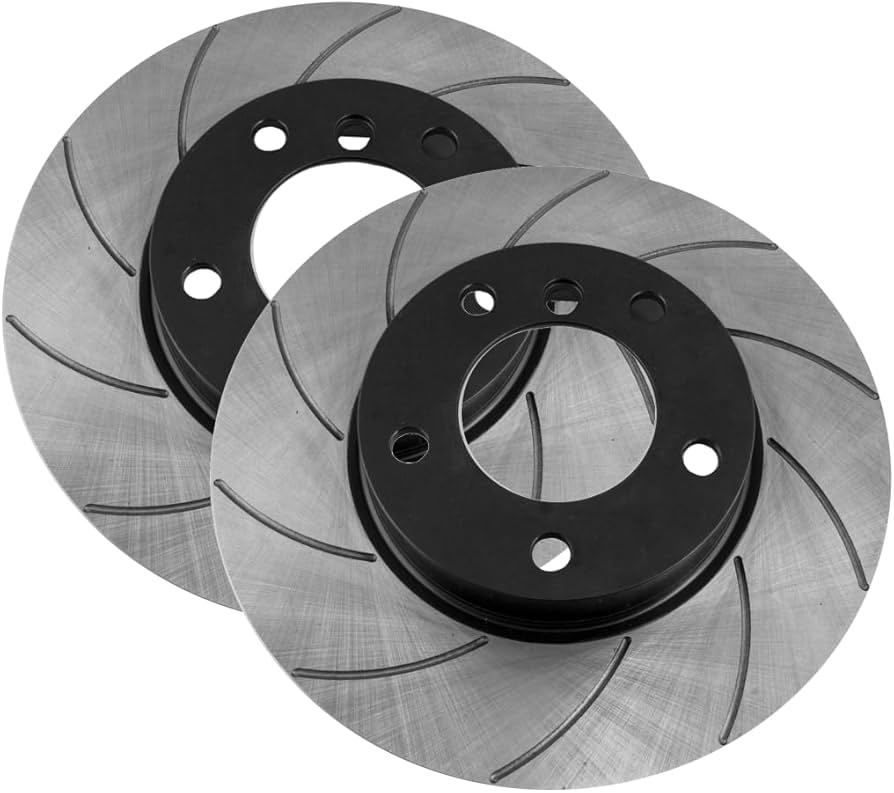
Front brake discs — also commonly called brake rotors — are large circular metal discs that rotate with your wheel. They are a core component of the disc brake system and work directly with the brake pads and caliper to bring your vehicle to a stop.
When you press the brake pedal, hydraulic pressure pushes the brake caliper to clamp the brake pads against both sides of the spinning disc. This contact creates friction, which converts the vehicle’s kinetic energy into heat and slows the wheel’s rotation.
Because the front axle handles the majority of braking force — typically around 60 to 70 percent — the front brake discs absorb enormous amounts of heat and stress every time you brake. Over thousands of kilometres of driving, this repeated thermal and mechanical stress causes the discs to wear, warp, or develop surface damage that eventually requires attention.
Types of Front Brake Discs
Not all front brake discs are the same. Understanding the different types helps you make an informed decision when it comes time for replacement.
- Solid Discs The most basic type, solid discs are a single piece of cast iron. They are commonly found on the rear axles of smaller vehicles and are suitable for light-duty applications with moderate braking demands.
- Vented Discs The most common type used on front brake discs of everyday passenger vehicles. Vented discs have internal cooling vanes between two friction surfaces, which allow air to circulate through the disc and dissipate heat more efficiently. This is critical for front brakes, which generate far more heat than rear brakes.
- Drilled Discs Drilled rotors feature holes across the disc surface. The holes help channel away heat, gases, and brake dust, improving wet-weather braking performance. However, they can be more prone to cracking under extreme and repeated thermal stress.
- Slotted Discs Slotted rotors have channels machined into the friction surface. These slots help clear debris, water, and gases from the pad-to-disc contact area, maintaining consistent grip. They are popular on SUVs, performance vehicles, and vehicles used for towing.
- Drilled and Slotted Discs A combination of both features, offering enhanced heat dissipation and debris clearance — often chosen for high-performance or heavy-duty applications.
For most drivers in Ajman running standard passenger vehicles, quality vented front brake discs provide the best balance of performance, longevity, and value.
How Front Brake Discs Wear Out
- Front brake discs do not last forever. With every braking event, a microscopic layer of material is removed from the disc surface through friction. Over time, this adds up.
- Beyond simple wear, discs can develop several other forms of damage:
- Thickness Variation As a disc wears unevenly across its surface, it develops slight variations in thickness — sometimes called disc runout. Even small inconsistencies can cause the brake pads to push back against the caliper during rotation, creating a pulsation felt through the brake pedal or steering wheel.
- Warping Thermal warping occurs when a disc is exposed to sudden extreme temperature changes — for example, driving hard and then immediately entering water, or braking repeatedly on a long descent without allowing the discs to cool. A warped disc causes a rhythmic pulsation during braking and significantly reduces braking efficiency.
- Surface Scoring and Grooving Deep grooves cut into the disc surface are usually caused by worn brake pads that have lost their friction material entirely, allowing the metal backing plate to grind directly against the disc. Grooved discs cannot provide consistent, even braking and must be resurfaced or replaced.
- Rust and Corrosion In humid conditions or after a vehicle sits unused for an extended period, surface rust can develop on front brake discs. Light surface rust is usually cleared away after a few brake applications. However, deep pitting corrosion — particularly on the edges of the disc — can indicate long-term neglect and may require replacement.
- Heat Cracks In extreme cases, repeated high-temperature braking can cause heat cracks to develop on the disc surface. A cracked disc is a serious safety hazard and must be replaced immediately — no exceptions.
Warning Signs That Your Front Brake Discs Need Attention
Your vehicle will usually communicate disc problems clearly. Watch for these warning signs:
- Vibration or Pulsation When Braking If you feel a rhythmic shudder through the brake pedal or the steering wheel when braking, this is one of the most telling signs of a warped or unevenly worn front brake disc. The sensation tends to worsen at higher speeds.
- Squealing or Grinding Noises Squealing indicates worn brake pads, but if the noise continues even after pad replacement, the disc surface may be the issue. Grinding is more serious — it typically means metal-on-metal contact that is damaging the disc rapidly.
- Longer Stopping Distances If your vehicle takes longer than usual to stop, or the braking feels inconsistent — sometimes strong, sometimes weak — your front brake discs may have surface variation, glazing, or heat damage affecting their performance.
- Visible Grooves on the Disc Surface During a wheel inspection or tyre change, you can often see the disc face through the wheel. Deep, visible grooves or a heavily ridged surface are clear signs that the disc needs professional attention.
- Burning Smell After Driving A strong burning smell, particularly after driving in heavy traffic or on a downhill road, can indicate overheated front brake discs — often caused by a sticking caliper, riding the brakes, or using an incorrect pad compound.
- Brake Warning Light Some modern vehicles equipped with disc wear sensors will trigger a dashboard warning light when the disc approaches minimum thickness. Take this warning seriously.
Front Brake Disc Minimum Thickness — Why It Matters
Every front brake disc has a manufacturer-specified minimum thickness. As the disc wears below this threshold, several problems emerge.
A thinner disc has less thermal mass, meaning it absorbs and dissipates heat less effectively. This increases the risk of brake fade — a temporary but dangerous reduction in braking performance caused by overheated components. A disc worn below minimum thickness is also structurally weaker and at greater risk of cracking under stress.
At Marwat Garage Ajman, our technicians always use a brake disc micrometer to measure disc thickness accurately during every brake inspection. We never guess — measurements are taken at multiple points around the disc to check for thickness variation as well as overall wear.
If your front brake discs are at or near minimum thickness, replacement is the only safe option.
Should You Resurface or Replace Front Brake Discs?
This is one of the most common decisions our team at Marwat Garage Ajman helps customers navigate.
Resurfacing (also called disc turning or skimming) involves using a precision lathe to remove a thin, even layer from the disc surface, eliminating minor grooves, scoring, and surface imperfections. The result is a smooth, flat friction surface that works effectively with new brake pads.
Resurfacing is a good option when:
- The disc has minor surface wear or light scoring
- The disc remains above minimum thickness after material removal
- There is no cracking, deep grooving, or structural damage
Replacement is necessary when:
- The disc is at or below minimum thickness
- Deep grooves, heat cracks, or severe corrosion are present
- The disc has warped beyond what resurfacing can correct
- The disc has been resurfaced previously and cannot safely accept further material removal
A general rule of thumb at Marwat Garage Ajman: if a disc needs resurfacing but would land very close to minimum thickness afterward, we recommend replacement. A fresh, full-thickness disc gives you the maximum safe service life and optimal braking performance.
Replacing Front Brake Discs at Marwat Garage Ajman
When you bring your vehicle to us for front brake disc replacement, our process is thorough and methodical:
- Vehicle Lift and Wheel Removal — The vehicle is raised safely and the front wheels removed to access the brake assembly.
- Full Brake Inspection — Pads, discs, calipers, caliper pins, brake lines, and fluid are all inspected before any work begins.
- Disc Measurement — Rotor thickness is measured at multiple points to determine whether resurfacing or replacement is appropriate.
- Old Disc Removal — The worn disc is carefully removed from the hub.
- Hub Surface Preparation — The hub face is cleaned to remove rust and debris, ensuring the new disc sits perfectly flat.
- New Disc and Pad Fitting — A quality replacement front brake disc is installed, along with new brake pads if required. Fitting both together ensures they bed in correctly and wear evenly from the start.
- Caliper and Hardware Service — Caliper pins are cleaned, lubricated, and inspected. Anti-squeal shims and hardware are replaced where needed.
- Brake Bedding — New discs and pads go through a controlled bedding procedure to transfer an even layer of friction material onto the disc surface — critical for proper performance.
- Test Drive and Verification — The vehicle is test-driven to confirm smooth, quiet, and consistent braking before handover.
The Effect of Ajman’s Climate on Front Brake Discs
Driving in the UAE presents unique challenges for brake components. Ajman’s summer temperatures regularly exceed 45°C, and the combination of intense heat, occasional sandstorms, and stop-and-go traffic creates a demanding environment for front brake discs.
Heat cycling — the repeated process of heating up during braking and cooling down between stops — is more extreme in the UAE than in temperate climates. This accelerates thermal fatigue and increases the risk of warping, particularly in discs that are already worn.
Dust and fine sand particles also act as mild abrasives, accelerating surface wear on both the disc and the brake pads. Choosing quality components designed for high-temperature performance is essential for UAE drivers — something our team at Marwat Garage Ajman takes into account with every brake service.
Frequently Asked Questions
We now have an FAQ list that we hope will help you answer
some of the more common ones.
The cost varies depending on your car’s make, model, and the type of key system it uses. Basic remote key fob programming is affordable, while smart key and proximity key programming for newer vehicles may cost more due to the advanced software required. Call us on +971-564761112 for a specific quote for your car.
In most cases, yes — but it depends on the make and model. Some vehicles require at least one working key to programme a new remote, while others allow a complete key replacement via OBD2 access. Our technicians will advise you after a quick diagnostic check.
If a fresh battery has not solved the problem, your key fob may have lost its synchronisation with the car’s ECU — this is a common issue after a battery change or flat car battery. The fix is a simple reprogramming, which we can do while you wait at our garage in Ajman.
Most key fob programming jobs take between 30 minutes and one hour. Smart key programming for newer models may take slightly longer if it requires extended ECU communication. We will give you an accurate time estimate when you bring in your vehicle.
We can source compatible replacement key fob shells and remotes for most popular vehicle makers sold in the UAE. If you already have a new fob, we can programme it for you. Call ahead to confirm availability for your specific model.
Got a questions?
Pulvinar neque laoreet suspendisse interdum consectetur libero id faucibus nisl. Lectus urna duis convallis convallis tellus.
Schedule Your Appointment Today
Your Automotive Repair & Maintenance Service Specialist