
Timing Chain & Timing Belt Service
That Rattling Sound on Startup Could Cost You an Engine — Timing Chain & Timing Belt Service in Ajman
Most car owners in Ajman never think about their timing chain or timing belt — until something goes wrong. And when it does go wrong, it rarely gives you a second chance.
A snapped timing belt or a jumped timing chain does not just stop your car. In most engines, it destroys it. Pistons collide with open valves at high speed, bending them, cracking heads, and turning a AED 800 service into a AED 8,000 engine repair — or worse, a full engine replacement.
The good news? This kind of failure is almost always preventable. Marwat Garage in Industrial Area 2, Ajman provides complete timing chain and timing belt service — inspection, replacement, tensioner service, and post-work verification — so your engine stays in perfect synchronisation and you stay on the road.
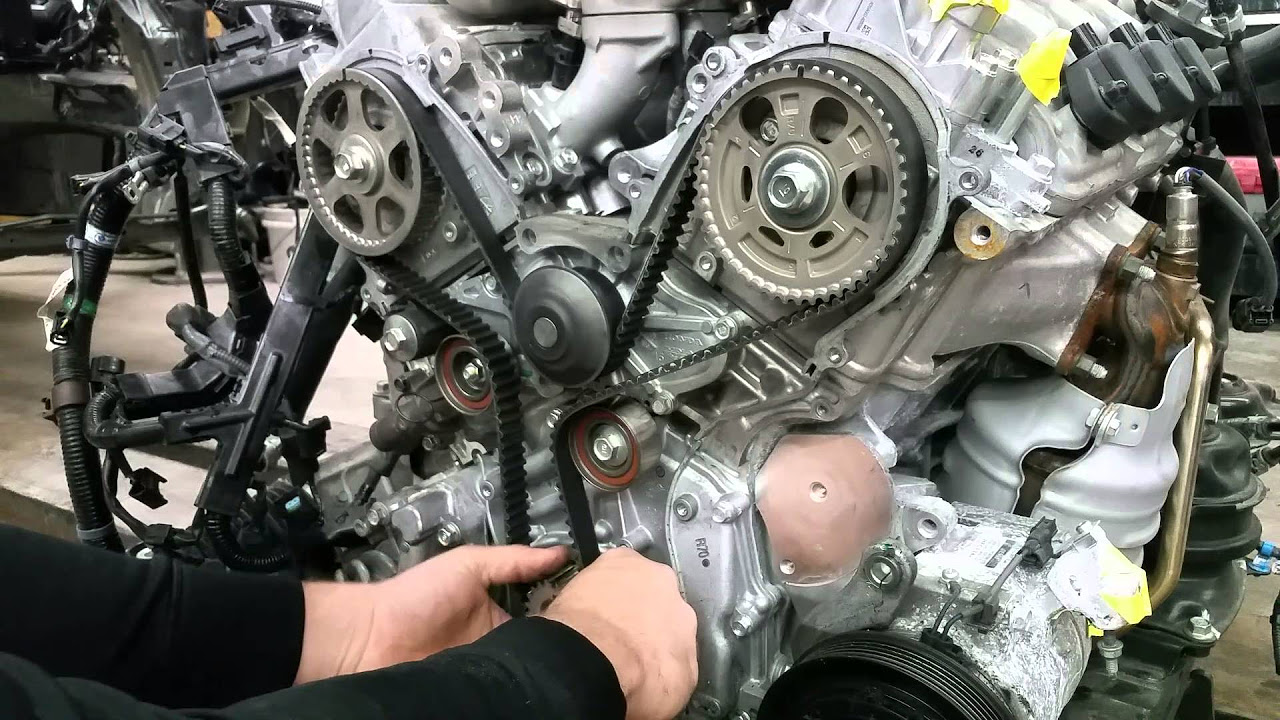
Timing Belt vs Timing Chain — What Is Actually Inside Your Engine?
These two components do the same job but work very differently, and knowing which one your car has changes everything about how you maintain it.
The timing belt is a toothed rubber belt that synchronises the rotation of the crankshaft and camshaft. It keeps your engine’s valves opening and closing at precisely the right moment relative to each piston’s position. Rubber degrades over time — heat, oil contamination, and age harden and crack it from the inside out, often with no visible warning on the surface. Most manufacturers specify replacement every 60,000 to 100,000 km regardless of appearance.
The timing chain is a metal chain that performs the same function but is designed to last the life of the engine — provided it receives regular oil changes and the tensioners and guides that support it are maintained. Chains do not snap suddenly the way belts do, but they stretch, skip teeth, and rattle when oil pressure is low, when tensioners wear out, or when sludge builds up from neglected oil changes. A chain that has jumped even one tooth causes misfires, poor performance, and potential valve damage.
A quick way to know which your car has: check your owner’s manual or simply ask us. Common belt-driven engines in the UAE include many Toyota, Honda, Mitsubishi, and Hyundai models. Chain-driven setups are standard on most Nissan, Ford, GM, BMW, and Mercedes-Benz engines — though this varies by generation and engine code.
Five Sounds and Symptoms You Should Never Ignore
Your engine usually warns you before a timing component reaches the point of failure. The problem is that these warnings are easy to dismiss — until they are not.
- A rattling or slapping noise on cold startup that fades after a few seconds is the classic sign of a worn timing chain and a weak tensioner. The tensioner loses pressure overnight and takes a moment to build up when the engine starts. Each cold start is wearing the chain further.
- Engine misfires or rough running that appear suddenly — especially if they are accompanied by a Check Engine Light showing camshaft position or crankshaft correlation codes — can indicate a chain that has stretched enough to cause timing drift.
- Difficulty starting or a no-start condition after the engine was running fine the day before sometimes points to a timing belt that has finally cracked and snapped overnight. When a belt goes, the engine cranks but does not fire — because without synchronisation, there is no combustion.
- Visible oil contamination around the timing cover suggests a leaking camshaft or crankshaft seal — and oil on a timing belt accelerates its deterioration dramatically. What might have lasted another 20,000 km can fail within weeks once oil reaches it.
- A metallic ticking that follows engine RPM — speeding up when you rev — is different from a rattle. This can indicate worn timing chain guides breaking apart inside the cover, sending plastic fragments through the oil system.
Any one of these symptoms is a reason to visit Marwat Garage immediately. Do not drive the vehicle further than necessary.
Other Car Repair Services
- - Engine Performance Service (Diagnostics)
- - Standard & Electronic Ignition Systems
- - Fuel Injection Service & Component Analysis
- - Emission Controls
- - Pattern Failure Analysis
- - Fuel Pump Service (Mechanical & Electric)
- - Carburetor Rebuilding & Set-Up Service
- - Fuel Tank Replacement & Services
- - Gas Gauge & Fuel Tank Sending Unit Service
- - Fuel Injector Diagnostic & Cleaning Service
- - Throttle Body Repairs & Clean And Service
- - Vacuum Leaks Diagnosed W/ Smoke Detection
- - Engine Replacement Service
- - Engine Repairing Service
- - Timing Chain & Timing Belt Service
- - Valve Work, Valve Grinding, And Cylinder Head Repairs
- - Engine Oil Leaks: Diagnose, Clean, And Recommended Repairs
- - Internal Gaskets Replacements
- - Front & Rear CV (Constant Velocity) Axle Service & Boot Service
- - Differential Repairs (Both Front & Rear Trans-Axle & Conventional)
- - Drive-Shaft Service
- - Suspension Inspection & Service
- - Wheel Alignment (Front & Rear)
- - Tire Rotation Service
- - Power Steering Repairs
- - Power Steering Flush Service
- - Wheel Bearing Replacements
Our Timing Service — What the Job Actually Involves
Timing belt and chain work is one of the most involved services in automotive repair. It requires proper tools, the right parts, and a technician who understands that rushing this job creates failures. Here is what a complete timing service at Marwat Garage looks like:
- Access and disassembly — Reaching the timing system means removing ancillary components: the engine cover, drive belts, the crankshaft pulley, and the timing cover itself. On some vehicles this also requires supporting the engine and removing a motor mount. We disassemble methodically and document every step.
- Inspection of all timing components — Before anything is replaced, we inspect the belt or chain, all tensioners, idler pulleys, timing chain guides, and the condition of the timing cover gaskets and seals. We show you what we find.
- Replacement of the full kit — not just the belt or chain — This is critical. Replacing only the belt and leaving the original tensioner and water pump (which is driven by the timing belt on many engines) is a false saving. A new belt on a failing tensioner will fail prematurely. We replace the complete timing kit — belt or chain, all tensioners, idler pulleys, and on belt-driven engines, the water pump — as a single job.
- Camshaft and crankshaft seal replacement — While the timing cover is off, replacing these seals costs very little in additional labour but eliminates the most common source of oil leaks on high-mileage engines. We recommend this on every timing job.
- Precise timing alignment — Every engine has specific timing marks that must be aligned exactly before assembly. Our technicians use the correct locking tools for your engine to set the camshaft and crankshaft positions accurately. A timing job done without the right alignment tools is a gamble.
- Reassembly, start-up, and verification — After reassembly, the engine is started and monitored. We check for leaks, listen for any abnormal noise, and use our diagnostic scanner to verify that camshaft and crankshaft position sensor readings are in correct correlation — confirming the timing is set accurately before you leave.
Timing Service Intervals — Know Where Your Car Stands
Vehicle Type | Timing Component | Typical Service Interval |
Most Toyota 4-cylinder (Camry, Corolla pre-2007) | Belt | 90,000 – 100,000 km |
Honda Accord, CR-V (pre-2013) | Belt | 100,000 km |
Mitsubishi Pajero, Lancer (older models) | Belt | 90,000 km |
Nissan Patrol, Altima, X-Trail | Chain | Oil-change dependent — inspect at 150,000 km |
BMW 3 Series, 5 Series | Chain | Inspect at 120,000–150,000 km |
Toyota Land Cruiser V8 (1UR/3UR) | Chain | Inspect at 150,000 km |
Ford Explorer, F-150 | Chain | Oil-change dependent — inspect at 120,000 km |
- Important note for UAE drivers: The extreme heat in Ajman and across the UAE accelerates rubber degradation in timing belts. If you are approaching the mileage interval — or if you bought a used vehicle and do not know the service history — do not wait. The cost of an inspection is negligible compared to the cost of a bent valve.
The Real Cost of Waiting vs. Acting Now
Here is a comparison that every car owner should see before deciding to delay this service:
- Proactive timing belt replacement on a typical 4-cylinder engine: approximately AED 600 – 1,200 including the full kit and water pump, depending on the vehicle.
- Engine repair after a belt snap — bent valves, cylinder head removal, machining, and reassembly: AED 4,000 – 9,000+, and the vehicle is off the road for days or weeks.
- Engine replacement if the interference damage is severe enough: AED 8,000 – 20,000+ depending on the engine.
Frequently Asked Questions
We now have an FAQ list that we hope will help you answer
some of the more common ones.
The cost varies depending on your car’s make, model, and the type of key system it uses. Basic remote key fob programming is affordable, while smart key and proximity key programming for newer vehicles may cost more due to the advanced software required. Call us on +971-564761112 for a specific quote for your car.
In most cases, yes — but it depends on the make and model. Some vehicles require at least one working key to programme a new remote, while others allow a complete key replacement via OBD2 access. Our technicians will advise you after a quick diagnostic check.
If a fresh battery has not solved the problem, your key fob may have lost its synchronisation with the car’s ECU — this is a common issue after a battery change or flat car battery. The fix is a simple reprogramming, which we can do while you wait at our garage in Ajman.
Most key fob programming jobs take between 30 minutes and one hour. Smart key programming for newer models may take slightly longer if it requires extended ECU communication. We will give you an accurate time estimate when you bring in your vehicle.
We can source compatible replacement key fob shells and remotes for most popular vehicle makers sold in the UAE. If you already have a new fob, we can programme it for you. Call ahead to confirm availability for your specific model.
Got a questions?
Pulvinar neque laoreet suspendisse interdum consectetur libero id faucibus nisl. Lectus urna duis convallis convallis tellus.
Schedule Your Appointment Today
Your Automotive Repair & Maintenance Service Specialist