Suspension Lower Arm Replacement
Suspension Lower Arm Replacement in Ajman: When Your Car's Foundation Needs Fixing
You notice it on the highway first. A slight pull to one side. A vague, wandering feeling through the steering wheel. Or maybe a clunking sound over speed bumps that was not there six months ago.
These are not random noises. They are your suspension telling you something is wrong — and in many cases, the lower arm is at the centre of it.
At Marwat Garage Ajman, we carry out suspension lower arm inspection and replacement for all vehicle makes and models — diagnosing the fault accurately and restoring the handling precision your car was built to deliver.
What Is the Suspension Lower Arm?
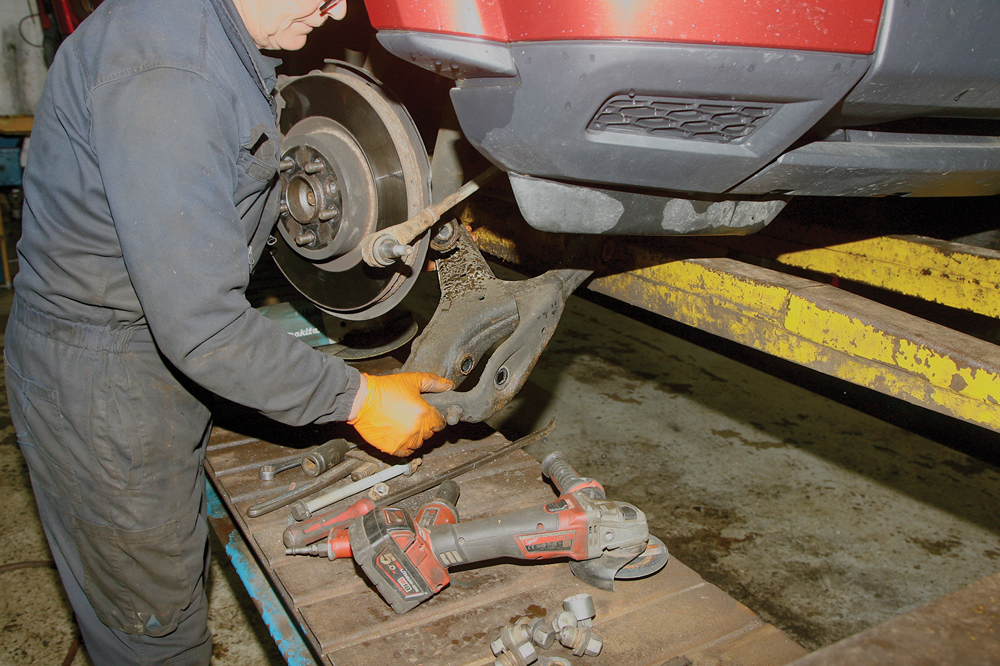
The suspension lower arm — also called the lower control arm — is one of the most critical components in your vehicle’s front suspension system.
It connects the vehicle’s chassis to the wheel hub, acting as the pivot point that allows the wheel to move up and down over road irregularities while keeping it correctly positioned relative to the steering geometry. The lower arm works together with the upper arm (on double-wishbone systems) or the strut (on MacPherson strut systems) to control the wheel’s movement in all directions.
At each end of the lower arm are two connection points: a ball joint that connects to the wheel hub, and one or two bushings that connect to the chassis. Both of these wear over time — and when they do, the precision of the wheel’s position and movement is compromised.
Why Lower Arms Wear Out in Ajman
The lower arm and its components work under constant load and stress. In Ajman’s driving conditions, this stress is amplified in several specific ways.
- Speed Bumps Ajman has a high density of speed bumps — in residential areas, outside schools, in commercial zones, and throughout industrial areas. Every speed bump sends an impact force directly through the suspension lower arm and its bushings. Over thousands of these impacts, the rubber bushings compress, crack, and eventually deteriorate.
- Pothole and Road Surface Impacts Rough road sections — particularly in industrial areas and on older residential roads — subject the lower arm to repeated sharp impacts. Unlike the gradual loading of normal driving, these sharp impacts stress the ball joint and bushings in ways that accelerate wear.
- High Mileage Commuting Many Ajman drivers cover significant daily mileage on inter-emirate routes to Dubai and Sharjah. High mileage means high cycle counts on every suspension component — accelerating wear on bushings and ball joints beyond what local driving alone would produce.
- Heat Effects on Rubber Bushings The rubber bushings in the lower arm are exposed to Ajman’s under-body heat — both from the road surface in summer and from the heat generated by the braking and drivetrain components nearby. Heat degrades rubber over time, causing it to harden, crack, and lose its ability to absorb vibration and control arm movement.
Other Car Repair Services
- EPS Module Repair
- Steering Rack Repair
- Front Shock Absorber Replacement
- Rear Shock Absorber Replacement
- Suspension Lower Arm Replacement
- Noises with Car Suspension & Steering
- Link Rod Replacement
- Tie Rod End Replacement
- Fuel Pump Replacement
- Gear Box Mounting Replacement
- Front Shocker Mount Replacement
- Engine Mounting Replacement
- Car Wash & Wax
- Premium Top Wash
- Water Pump Replacement
- ECM Repair
- Power Window Repair
- Door Latch Replacement
- Mud Flaps
- Starter Motor Repair
Signs the Lower Arm Needs Replacement
- Clunking or knocking sound over bumps A worn lower arm bushing produces a hollow clunking sound when the suspension moves over bumps, speed humps, or uneven road surfaces. The sound comes from the arm moving with excess play in the bushing rather than being properly cushioned.
- Vehicle pulling to one side When a lower arm bushing deteriorates significantly, the wheel’s alignment position shifts. This causes the vehicle to pull left or right during normal driving — not just under braking.
- Vibration through the steering wheel Excessive play in a worn ball joint or deteriorated bushing transmits road vibration directly into the steering column. The steering wheel vibrates in ways it should not — particularly at certain speeds.
- Uneven tyre wear A lower arm that has allowed wheel alignment to shift causes the tyre to run at an incorrect angle. The tyre wears unevenly — typically on one edge — and wears out faster than it should.
- Wandering or imprecise steering The steering feels vague, requires constant small corrections, or the vehicle does not track straight on a flat, straight road. This is a consequence of the wheel position no longer being accurately controlled.
- Clunking during braking Under braking, the front end dips and the suspension compresses. A worn lower arm bushing — particularly the rear bushing — produces a clunk during this movement that is distinct from brake-related noises.
What the Lower Arm Replacement Involves
Full Suspension Inspection:
Before the lower arm is replaced, we inspect the full front suspension system — checking the upper arm (where fitted), the strut or shock absorber, the ball joints, the track rod ends, and the anti-roll bar links. A lower arm replacement is a significant job, and we use the opportunity to assess all surrounding components.
Lower Arm Removal:
The wheel is removed, the ball joint and bushing connections are released, and the lower arm is removed from the vehicle.
Inspection of Ball Joint and Bushings:
The removed arm is assessed to confirm the specific wear that caused the symptoms. This confirms whether the issue is the bushings, the ball joint, or the arm itself.
New Arm Installation:
A new lower arm — complete with fresh bushings and ball joint — is fitted. At Marwat Garage Ajman, we use quality parts matched to your vehicle’s specifications. Fitting a complete arm rather than attempting to press bushings individually ensures consistent, reliable results.
Wheel Alignment Check:
After lower arm replacement, a wheel alignment check is essential. The arm replacement changes the suspension geometry, and the alignment must be set correctly before the vehicle is returned. Driving on misaligned wheels after a suspension repair accelerates tyre wear and reduces handling safety.
Road Test:
We carry out a road test to confirm the clunking is gone, the steering tracks straight, and the vehicle handles correctly before it is returned.
Lower Arm Replacement and Wheel Alignment — Why Both Matter
This is a point many garages skip — and drivers pay for it in tyre wear.
The lower arm directly determines the position of the front wheel relative to the chassis. When a new arm is fitted, the wheel’s camber and toe angles change from whatever the worn arm had settled into. If alignment is not checked and corrected after the replacement, the new arm does its job but the wheel still points in the wrong direction.
At Marwat Garage Ajman, we always recommend a wheel alignment check immediately after a lower arm replacement. It is not an optional addition — it is a necessary completion of the repair.
Both Sides or One?
When one lower arm is worn, the other side has typically been exposed to the same road conditions and mileage. In many cases, if one side has reached the replacement threshold, the other is not far behind.
We inspect both sides during the initial assessment and give you an honest evaluation. Replacing both arms at the same visit — where both are worn — saves labour time and ensures balanced suspension performance on both front wheels.
Why Marwat Garage Ajman for Lower Arm Replacement
Suspension work requires accurate diagnosis, quality parts, and proper completion — including the alignment check that makes the repair complete.
At Marwat Garage, we inspect the full suspension system before recommending a lower arm replacement. We use correct specification parts. We complete every job with a wheel alignment check. And we road-test before returning the vehicle.
Our technicians are experienced with suspension systems across all major vehicle brands — Japanese, Korean, European, American, and Chinese models, across passenger cars, SUVs, and pickup trucks.
Frequently Asked Questions
We now have an FAQ list that we hope will help you answer
some of the more common ones.
The cost varies depending on your car’s make, model, and the type of key system it uses. Basic remote key fob programming is affordable, while smart key and proximity key programming for newer vehicles may cost more due to the advanced software required. Call us on +971-564761112 for a specific quote for your car.
In most cases, yes — but it depends on the make and model. Some vehicles require at least one working key to programme a new remote, while others allow a complete key replacement via OBD2 access. Our technicians will advise you after a quick diagnostic check.
If a fresh battery has not solved the problem, your key fob may have lost its synchronisation with the car’s ECU — this is a common issue after a battery change or flat car battery. The fix is a simple reprogramming, which we can do while you wait at our garage in Ajman.
Most key fob programming jobs take between 30 minutes and one hour. Smart key programming for newer models may take slightly longer if it requires extended ECU communication. We will give you an accurate time estimate when you bring in your vehicle.
We can source compatible replacement key fob shells and remotes for most popular vehicle makers sold in the UAE. If you already have a new fob, we can programme it for you. Call ahead to confirm availability for your specific model.
Got a questions?
Pulvinar neque laoreet suspendisse interdum consectetur libero id faucibus nisl. Lectus urna duis convallis convallis tellus.
Schedule Your Appointment Today
Your Automotive Repair & Maintenance Service Specialist