
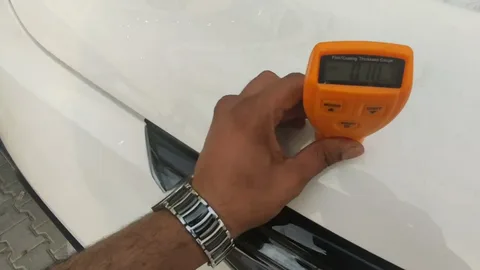
When I first picked up a car paint tester at our workshop counter almost eight years ago, I honestly thought it was just another gadget that customers wouldn’t care about. I was wrong. Within a month of using it on every used car that rolled into our garage for inspection, I realized this small device was saving people thousands of dirhams by catching hidden accident repairs before the deal was signed. At Marwat Garage in Ajman and Sharjah, a car paint tester is now one of the first tools we reach for, right alongside the lift and the diagnostic scanner.
This guide is written from that hands-on experience — not from a textbook. I’ll walk you through what a car paint tester actually does, how to use one, what the numbers mean, and what other paint-related tools (from spray guns to sandpaper) you’ll likely need along the way if you’re serious about vehicle bodywork, whether you’re a buyer, a detailer, or a small garage owner like us.
What Is a Car Paint Tester?
A car paint tester is a handheld device used to measure the thickness of the paint layer on a vehicle’s body panels. Most technicians and detailers know it by a few other names too — automotive paint tester, paint depth gauge, or simply a paint thickness gauge. Whatever you call it, the job is the same: it tells you, in microns or mils, exactly how much paint (and sometimes filler) sits on top of the metal.
Every factory-applied coat has a fairly predictable thickness. When a car has been in an accident and repainted, that thickness usually changes — sometimes dramatically. This is why a simple car paint tester has become such a critical tool for used car paint inspection. It doesn’t just tell you “yes there’s paint here”; it tells you whether that paint is original OEM paint or a repaint job hiding bodywork underneath.
Why Paint Thickness Matters When Buying a Used Car
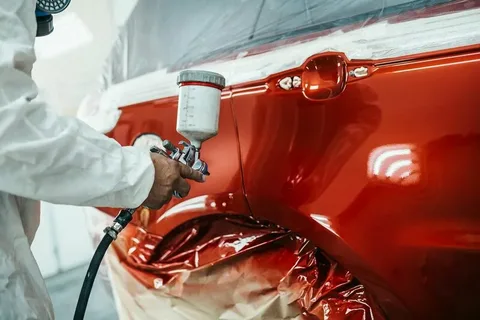
I’ve lost count of how many customers have brought a car to Marwat Garage insisting the seller told them it was “accident free,” only for our vehicle paint inspection to tell a different story. This is the single biggest reason people search for a car paint tester in the first place.
Here’s the logic in plain terms: factory paint on most vehicles sits between roughly 90 and 150 microns, depending on the manufacturer. If our device reads 250 microns on the front bumper but only 110 microns on the roof, that’s a clear sign of repaint detection — someone has resprayed that panel, likely after bodywork or an accident. This kind of car body paint analysis is exactly what separates a confident used car paint inspection from a guess.
It’s worth noting that plastic bumpers and some non-ferrous substrate areas behave differently than steel panels, so an experienced eye still matters — the gauge gives you data, but reading that data correctly is a skill you build over time.
How Digital Paint Thickness Gauges Work
Most modern devices use a magnetic induction sensor for measuring paint over ferrous substrate (regular steel body panels) and an eddy-current method for non-ferrous substrate like aluminum panels. This is why good gauges are labeled as working on both galvanized steel and aluminum — cheaper units only handle one or the other, which is a problem on modern vehicles that mix steel doors with aluminum hoods or fenders.
The reading appears almost instantly, usually within a second of contact, and is displayed in microns (μm) or mils depending on your regional setting. A digital paint meter of decent quality will hold calibration for years with proper care, and most professional-grade tools let you zero the reading against a known reference plate before you start, which keeps your paint thickness measurement accurate panel to panel.
When I’m doing a full car body paint analysis, I take at least six to eight readings per panel — different manufacturers apply paint slightly unevenly even at the factory, so a single spot reading can be misleading. Averaging a few points on each fender, door, and bumper gives a much more reliable picture than relying on one number from a car paint checker.
UV Light vs Digital Paint Thickness Gauges
A lot of customers ask us whether a UV light for car paint inspection can replace a proper gauge. It can’t, but it’s a useful companion tool. Shining a UV car paint detector across a panel in low light can reveal overspray, masking lines, or subtle color mismatches that are hard to catch with the naked eye in daylight.
That said, a UV car paint detector is a visual aid, not a measuring instrument. It won’t tell you the actual paint thickness in mm or microns the way a proper car paint detector with a sensor does. For a serious inspection, we always pair the two: UV light to spot visual inconsistencies, then the digital gauge to confirm with real numbers. If you only have budget for one, the digital device is the one that actually gives you defendable data.
Choosing the Right Car Paint Tester for Your Needs
Not every car paint tester is built the same, and the right choice depends on how often you’ll use it.
Pocket pen-style testers — A car paint tester pen is compact, affordable, and fine for occasional buyers who just want peace of mind before purchasing one car. They’re not the most precise car paint checking device on the market, but for a one-time check, they do the job.
Professional digital gauges — If you’re running inspections regularly, invest in a proper car paint check machine with dual ferrous/non-ferrous sensors, memory storage, and calibration certificates. This is what we use daily at Marwat Garage, and it’s the difference between a rough estimate and a report you can actually show a customer with confidence.
App-connected devices — Some higher-end paint detectors for car inspection sync readings to your phone, building a full panel-by-panel map automatically. Useful for detailers doing paperwork-heavy pre-purchase inspections.
Whichever car paint checker you choose, look for one rated for both steel and aluminum panels, with a clear digital display showing car paint thickness in mm or microns, and decent battery life — nothing worse than a dead gauge halfway through an inspection.
Beyond Testing: Paint Prep, Spraying, and Repair Tools
A car paint tester rarely works alone in a real garage — it’s part of a bigger toolkit. Once you’ve identified a panel that needs attention, the next steps usually involve prep and spraying.
Good sandpaper for car paint work is non-negotiable; skipping proper grit progression is the number one reason amateur respray jobs look patchy later. After sanding, panels often need an undercoat paint for car surfaces and, where rust is a concern, an anti rust paint for car chassis application before any color goes on.
For the actual spraying, you’ll need a reliable car paint gun or car paint spray gun, and for smaller touch-ups a simple car paint spray can or car paint pen does the trick without needing a full booth setup. Some workshops handling higher volume invest in a car paint booth, and there’s a healthy market for a used car paint booth for sale if you’re setting up a small operation on a budget.
Color matching matters too — white spray paint for car panels is one of the most requested shades we mix, simply because white and its many factory variants are so common on the roads here. For a lasting, chip-resistant finish, a car paint hardener is mixed into the topcoat, and some customers specifically request rubber paint for car finishes on wheels or trim for a matte, protective look.
If you’re shopping locally, searching car spray paint Dubai will turn up plenty of suppliers, though we source most of our materials directly for consistency across every job at our Ajman and Sharjah locations.
Our Experience at Marwat Garage
Every week at Marwat Garage, we run our car paint tester across incoming vehicles before we even open the hood. It’s part of our standard intake process, and it’s caught more hidden accident history than any other single check we do.
Some of the repair work we handle most often, based directly on what our paint thickness readings reveal, includes left fender paint, left alloy paint, and front bumper paint — these three areas consistently show the widest thickness variation on the used cars that come through our doors, which tells us they’re common accident and curb-damage points on the roads in Ajman and Sharjah. When a customer needs any of these repaired properly, we sand, prime, match the color, and reseal to factory-equivalent thickness, then re-test with the same gauge to confirm the finish is right.
This closed loop — test, repair, re-test — is really the heart of good paint work. A car paint tester isn’t just for catching problems; it’s for proving the fix actually worked.
What to Look for in a Quality Paint Coating Tester
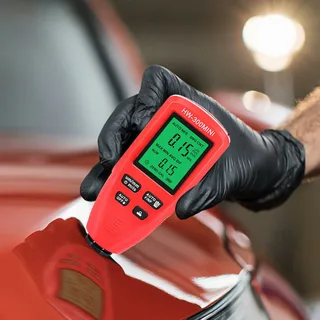
If you’re buying your own device rather than relying on a garage, a few things separate a reliable paint coating tester from a toy:
- Dual-mode sensing for both ferrous substrate and non-ferrous substrate materials
- Automatic substrate detection, so you’re not manually switching modes on aluminum panels
- Calibration function against a reference plate
- Clear display in both microns and mils
- Decent build quality — this tool gets used outdoors, often in heat and dust
A genuine automotive coating gauge from a known brand will cost more upfront than a no-name pen tester, but for anyone doing regular vehicle paint inspection work, the accuracy pays for itself the first time it flags a bad repaint before a deal closes.
Frequently Asked Questions
1. What does a car paint tester actually measure? It measures the thickness of the paint (and any filler) sitting on top of the metal body panel. The reading is shown in microns or mils.
2. Is a car paint tester accurate on aluminum panels? Only if it uses eddy-current sensing for non-ferrous substrate. Cheaper ferrous-only gauges will give false or zero readings on aluminum.
3. What is a normal paint thickness for an untouched panel? Most factory panels read between roughly 90–150 microns, though this varies slightly by manufacturer and model.
4. Can a UV light replace a digital paint thickness gauge? No. UV light is useful for spotting overspray and masking lines visually, but only a digital gauge gives you an actual paint thickness in mm or microns.
5. Why do readings vary between panels on the same car? Factory application is never perfectly even, and previous repairs can add extra coats. This is why averaging several readings per panel matters.
6. Is a pen-style car paint tester good enough for a one-time car purchase check? For a single pre-purchase inspection, a pen tester is usually accurate enough to flag obvious repaints and give buyers peace of mind.
7. Does a high paint thickness reading always mean an accident repair? Not always — it can also mean extra clear coat, a factory touch-up, or minor cosmetic resprays, so context and panel comparison matter.
8. Where can I get a professional paint inspection done? A garage with a calibrated digital gauge, like our team at Marwat Garage in Ajman and Sharjah, can give you a full panel-by-panel report before you buy or sell.
A car paint tester is a small tool that solves a big problem: knowing what’s really under the paint before you commit to buying, selling, or repairing a vehicle. Whether you go with a simple pen device or a professional-grade digital paint meter, the goal stays the same — real numbers instead of guesswork. Combine that data with good prep work, the right spray equipment, and an experienced eye, and you’ve got everything you need for an honest, lasting paint job. That’s exactly the approach we bring to every car that comes through Marwat Garage in Ajman and Sharjah.