
EPS Module Repair
EPS Module Repair vs. Replacement
Not every EPS fault requires a new module.
Many common EPS module failures — particularly those caused by specific component failures, solder joint cracking, or moisture damage — are repairable at the module level. Component-level repair of the EPS module restores it to full function at a significantly lower cost than replacement with a new unit.
Some faults — particularly software corruption or irreparable physical damage to the module circuit board — require replacement. We assess the specific fault through diagnosis and give you an honest evaluation of whether repair or replacement is the appropriate solution for your vehicle.
Where replacement is needed, we source the correct module specification for your vehicle’s make, model, year, and trim level — and carry out the calibration and programming required after fitting.
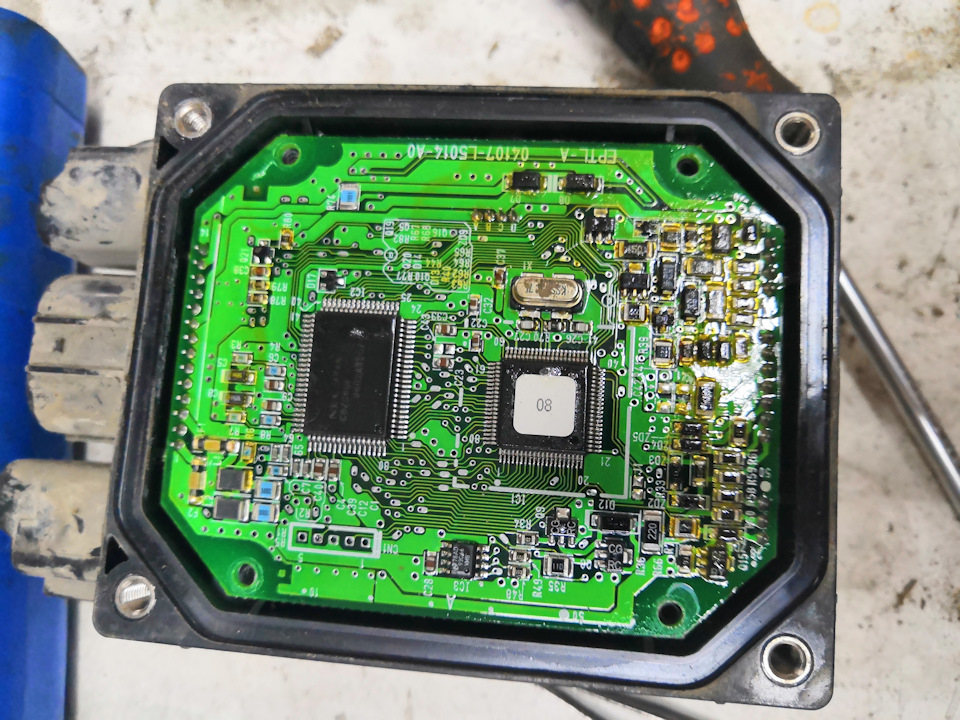
What Is the EPS Module?
Electric Power Steering — found on most vehicles manufactured from the mid-2000s onwards — replaces the traditional hydraulic power steering pump with an electric motor that provides steering assistance on demand.
At the centre of this system is the EPS module — also called the EPS control unit or power steering ECU. This is the electronic brain of the steering system. It receives input from the steering torque sensor (which measures how much effort the driver is applying to the steering wheel), the vehicle speed sensor, and other system inputs. Based on these readings, it calculates how much electric motor assistance to provide and sends the appropriate commands to the steering motor.
The EPS module makes hundreds of calculations and decisions every second the vehicle is in motion. When it develops a fault — whether from heat, moisture, vibration, or electronic component failure — the steering assistance it controls becomes unreliable, reduced, or absent.
Why EPS Systems Are Common in Ajman — and Why They Fail
Electric power steering is now standard on the vast majority of new vehicles sold in the UAE. Japanese, Korean, European, American, and Chinese vehicles across all price ranges use EPS as the default system.
Its advantages over hydraulic systems are real — it is more fuel-efficient, requires no steering fluid, and eliminates the possibility of hydraulic leaks. But the EPS module is an electronic component operating in an environment that is genuinely hostile to electronics.
- Heat Damage The EPS module is typically located in the engine bay or the steering column assembly — both of which experience extreme heat in Ajman’s climate. Electronic components — capacitors, resistors, solder joints, and integrated circuits — are all affected by sustained high temperatures. Over time, heat causes solder joint cracking, capacitor failure, and the degradation of insulating materials inside the module.
- Moisture Ingress The UAE’s coastal humidity, combined with occasional rain and washing, means moisture finds its way into electronic modules over time — particularly where seals or protective coatings have been compromised by heat cycling. Moisture causes corrosion on circuit board tracks and component leads — one of the most common causes of EPS module failure.
- Vibration-Induced Component Failure Ajman’s road surfaces — speed bumps, rough sections, and highway joints — subject the vehicle to continuous vibration. Electronic modules mounted in the steering column or engine bay experience this vibration directly. Over time, vibration causes micro-fractures in solder joints and loose component connections that produce intermittent faults.
- Voltage Spikes and Electrical System Issues The EPS motor draws significant current — a weak battery, a failing alternator, or a loose earth connection can expose the EPS module to voltage irregularities. The module’s internal components are designed to handle normal voltage ranges — sustained exposure to abnormal voltages accelerates component failure.
- Software and Calibration Issues Some EPS faults are not hardware failures — they are software corruption or calibration drift in the steering angle sensor or torque sensor that the module relies on for its calculations. These faults can produce steering warning lights and power loss without any physical component having failed.
Other Car Repair Services
- EPS Module Repair
- Steering Rack Repair
- Front Shock Absorber Replacement
- Rear Shock Absorber Replacement
- Suspension Lower Arm Replacement
- Noises with Car Suspension & Steering
- Link Rod Replacement
- Tie Rod End Replacement
- Fuel Pump Replacement
- Gear Box Mounting Replacement
- Front Shocker Mount Replacement
- Engine Mounting Replacement
- Car Wash & Wax
- Premium Top Wash
- Water Pump Replacement
- ECM Repair
- Power Window Repair
- Door Latch Replacement
- Mud Flaps
- Starter Motor Repair
Signs Your EPS Module Has a Fault
EPS or Power Steering Warning Light:
The most direct signal. A dedicated EPS warning light or a power steering warning on the instrument cluster indicates the system has detected a fault and logged a diagnostic trouble code. The light’s appearance does not always mean the steering has failed — it means the system has detected something outside its normal parameters.
Intermittent Power Steering Assistance:
The steering works normally sometimes, then suddenly becomes heavy and unassisted — then returns to normal. This intermittent pattern is a classic sign of a connection issue, a failing component inside the module, or a sensor fault that produces inconsistent readings.
Permanently Heavy Steering:
A complete loss of power steering assistance that does not return. The vehicle is still drivable but requires significantly more effort to steer — particularly at low speeds and when parking.
Jerky or Inconsistent Steering Assistance:
The power assistance varies unpredictably — sometimes providing too much, sometimes too little. The steering feels inconsistent or twitchy rather than smooth and progressive.
Steering that Drifts or Pulls:
EPS module faults can cause the system to apply unintended steering correction — or fail to apply the corrections it should — resulting in the vehicle pulling to one side or the steering feeling as though it is fighting the driver’s inputs.
No Steering Assistance at All:
A completely failed EPS module produces no assistance — the steering is entirely manual. While controllable at low speeds, this is exhausting at highway speeds and extremely difficult in parking manoeuvres.
How We Diagnose EPS Module Faults
EPS module faults must be diagnosed electronically before any repair is attempted. The warning light alone does not tell us which component has failed or whether the issue is hardware, software, or sensor-related.
- Diagnostic Scan We connect a professional diagnostic scanner to the vehicle’s OBD port and read all stored and pending fault codes from the EPS system. The codes identify which part of the system the module has flagged — the motor, the torque sensor, the steering angle sensor, the power supply, or the module itself.
- Live Data Analysis We read live data from the EPS system while the steering is operated — checking torque sensor readings, steering angle sensor output, motor current draw, and module output commands. Abnormal readings in any of these reveal where the fault is occurring in real time.
- Steering Angle Sensor Calibration Check The steering angle sensor must be calibrated to the correct centre position. A sensor that is out of calibration causes the EPS module to apply incorrect corrections — producing pull and inconsistent assistance. We check calibration as part of every EPS diagnosis.
- Module and Wiring Inspection We inspect the EPS module connections, wiring harness, and earth points for corrosion, damage, or loose connections. Many EPS faults are caused by poor connections rather than module failure — and these are far simpler and less costly to address.
- Battery and Charging System Check We verify the battery voltage and alternator output. An EPS system operating with an underperforming battery or charging system can produce symptoms that mimic module failure. Confirming the electrical supply is correct before proceeding prevents misdiagnosis.
EPS Module Repair vs. Replacement
Not every EPS fault requires a new module.
Many common EPS module failures — particularly those caused by specific component failures, solder joint cracking, or moisture damage — are repairable at the module level. Component-level repair of the EPS module restores it to full function at a significantly lower cost than replacement with a new unit.
Some faults — particularly software corruption or irreparable physical damage to the module circuit board — require replacement. We assess the specific fault through diagnosis and give you an honest evaluation of whether repair or replacement is the appropriate solution for your vehicle.
Where replacement is needed, we source the correct module specification for your vehicle’s make, model, year, and trim level — and carry out the calibration and programming required after fitting.
After EPS Module Repair — Calibration
After EPS module repair or replacement, the steering angle sensor must be recalibrated — set to the correct centre position that corresponds to the wheels pointing straight ahead.
This calibration is done using our diagnostic equipment. Without it, the EPS system does not have a correct reference point for its calculations, and the assistance it provides will be skewed — the steering will feel off-centre or will pull in one direction.
At Marwat Garage Ajman, calibration is carried out as part of every EPS module repair or replacement — it is not a separate charge, it is a completion of the job.
Why Marwat Garage Ajman for EPS Module Repair
EPS module repair requires proper diagnostic equipment, electronic fault diagnosis experience, and the calibration capability to complete the job correctly.
At Marwat Garage, we diagnose before we recommend. We distinguish between module faults, sensor faults, software issues, and connection problems — each of which requires a different solution. And we carry out post-repair calibration as a standard part of every EPS service.
Our technicians are experienced with EPS systems across all major vehicle brands — Japanese, Korean, European, American, and Chinese models across all vehicle types.
Frequently Asked Questions
We now have an FAQ list that we hope will help you answer
some of the more common ones.
The cost varies depending on your car’s make, model, and the type of key system it uses. Basic remote key fob programming is affordable, while smart key and proximity key programming for newer vehicles may cost more due to the advanced software required. Call us on +971-564761112 for a specific quote for your car.
In most cases, yes — but it depends on the make and model. Some vehicles require at least one working key to programme a new remote, while others allow a complete key replacement via OBD2 access. Our technicians will advise you after a quick diagnostic check.
If a fresh battery has not solved the problem, your key fob may have lost its synchronisation with the car’s ECU — this is a common issue after a battery change or flat car battery. The fix is a simple reprogramming, which we can do while you wait at our garage in Ajman.
Most key fob programming jobs take between 30 minutes and one hour. Smart key programming for newer models may take slightly longer if it requires extended ECU communication. We will give you an accurate time estimate when you bring in your vehicle.
We can source compatible replacement key fob shells and remotes for most popular vehicle makers sold in the UAE. If you already have a new fob, we can programme it for you. Call ahead to confirm availability for your specific model.
Got a questions?
Pulvinar neque laoreet suspendisse interdum consectetur libero id faucibus nisl. Lectus urna duis convallis convallis tellus.
Schedule Your Appointment Today
Your Automotive Repair & Maintenance Service Specialist