Rear Shock Absorber Replacement
Rear Shock Absorber Replacement in Ajman: Restore the Ride, Protect the Tyres
Every speed bump. Every pothole. Every rough patch of road in Ajman’s industrial areas.
Your rear shock absorbers are absorbing all of it — converting the energy of each impact into heat so your passengers do not feel it and your tyres stay in contact with the road.
When they wear out, you feel every bump that you used to not notice. The rear of the car bounces after obstacles instead of settling. Load carrying becomes unpredictable. And the tyres that are supposed to be gripping the road are spending more time in the air than on it.
At Marwat Garage Ajman, we inspect and replace rear shock absorbers for all vehicle types — restoring ride quality, stability, and tyre contact that worn shocks have gradually taken away.
What Do Rear Shock Absorbers Do?
Shock absorbers — often called dampers — control how the suspension moves in response to road inputs.
When a wheel hits a bump, the spring compresses to absorb the impact energy. Without a shock absorber, the spring would simply bounce — compressing and extending repeatedly until the energy dissipated on its own. On a moving vehicle, this would mean constant, uncontrolled bouncing.
The shock absorber’s job is to dampen this spring movement — converting the kinetic energy into heat through hydraulic resistance and allowing the suspension to settle quickly after each impact.
The rear shock absorbers specifically control the rear axle’s response to road inputs — keeping the rear tyres in firm contact with the road surface, maintaining stability under load, and preventing the rear end from pitching and bouncing excessively.
Why Rear Shocks Wear Faster in Ajman
- Speed Bumps — Constant and Unavoidable Ajman has speed bumps throughout its residential, commercial, and industrial areas. Many of these bumps are sharp-edged and significant in height. Every single one sends a compression and rebound cycle through the rear shock absorbers. Over thousands of speed bumps, the internal hydraulic components of the shock absorber gradually degrade.
- Rough Road Surfaces Industrial area roads, construction zone diversions, and older residential streets subject the rear shocks to continuous, irregular vibration inputs that are more damaging than smooth highway driving.
- Frequent Load Carrying Many vehicles in Ajman — particularly pickup trucks, SUVs, and family cars — regularly carry significant loads. Boot-heavy loads, passengers in the rear seats, and cargo all increase the static and dynamic load on the rear shock absorbers, accelerating wear.
- Heat Degradation of Seals The internal seals in a hydraulic shock absorber are made from rubber compounds that degrade in sustained heat. Ajman’s under-body temperatures in summer are high enough to accelerate this seal degradation — leading to oil leaks that reduce the damper’s effectiveness.
Signs Your Rear Shock Absorbers Need Replacing
- Excessive bouncing after speed bumps After crossing a speed bump or pothole, the rear of the car should settle within one or two body movements. If it continues to bounce — three, four, or more times — the rear shocks are no longer damping correctly.
- Rear end dipping under braking When you brake, weight transfers forward. Worn rear shocks allow the rear end to pitch up noticeably rather than maintaining a stable platform — this affects braking stability and can cause the rear wheels to skip.
- Body roll in corners Worn rear shocks increase body roll in corners and lane changes. The rear of the car feels unstable and leans excessively — reducing driver confidence and handling safety.
- Cupping or scalloping on rear tyres When rear shocks fail to keep the tyres in firm contact with the road, the tyre bounces on the road surface. This creates a cupped or scalloped wear pattern — irregular dips around the tyre circumference — that is a direct diagnostic sign of shock absorber failure.
- Oil leaking from the shock absorber body A visible streak of oil on the outside of the shock absorber body indicates an internal seal failure. Once the hydraulic fluid begins to leak, damping performance drops progressively.
- Knocking or clunking from the rear A worn shock absorber mount or a shock that has lost its internal resistance produces a knocking sound over bumps — distinct from the more hollow clunking of a bushing problem.
- Rear of the car sitting lower than usual While this is more commonly a spring issue, a completely collapsed shock absorber can cause the rear ride height to drop noticeably.
Other Car Repair Services
- EPS Module Repair
- Steering Rack Repair
- Front Shock Absorber Replacement
- Rear Shock Absorber Replacement
- Suspension Lower Arm Replacement
- Noises with Car Suspension & Steering
- Link Rod Replacement
- Tie Rod End Replacement
- Fuel Pump Replacement
- Gear Box Mounting Replacement
- Front Shocker Mount Replacement
- Engine Mounting Replacement
- Car Wash & Wax
- Premium Top Wash
- Water Pump Replacement
- ECM Repair
- Power Window Repair
- Door Latch Replacement
- Mud Flaps
- Starter Motor Repair
Our Rear Shock Absorber Replacement Process
- Full Rear Suspension Assessment Before replacing the shock absorbers, we inspect the complete rear suspension — checking the springs, suspension arms, bushings, anti-roll bar links, and wheel bearings. A shock absorber replacement visit is the ideal time to identify any other rear suspension components that are approaching their service limit.
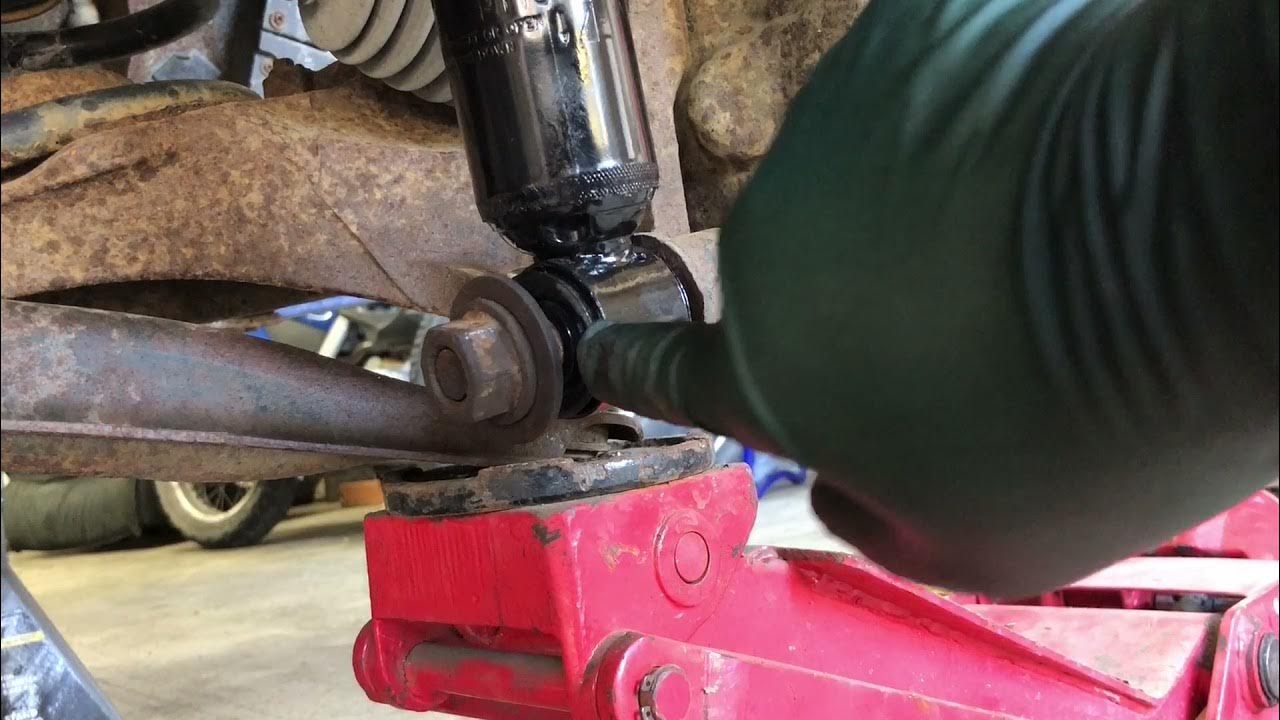
- Shock Absorber Removal The rear wheels are removed, and the upper and lower mounting bolts of the shock absorber are released. On some vehicles, this requires partial interior trim removal to access the upper mounting point — we handle this carefully to avoid damage.
- Mounting and Top Mount Inspection The shock absorber top mount — the rubber mounting that connects the shock to the vehicle body — is inspected. Worn top mounts produce knocking sounds and reduce the effectiveness of a new shock absorber if not replaced at the same time. We recommend replacing top mounts when they show significant deterioration.
- New Shock Absorber Installation A new shock absorber matched to your vehicle’s specification is fitted with all mounting hardware torqued to the manufacturer’s specification.
- Bump Stop Check The bump stop — the rubber buffer that prevents the suspension from fully compressing and causing metal-to-metal contact — is checked and replaced if it has compressed or deteriorated.
- Wheel Alignment Check After rear shock absorber replacement on vehicles where the rear suspension geometry can be affected by the replacement, a wheel alignment check is recommended. We advise specifically for your vehicle type.
- Road Test We road-test the vehicle over Ajman’s typical road surfaces — including speed bumps — to confirm the rear end settles correctly, the ride is smooth, and no new noises have been introduced.
Replace One or Both?
Shock absorbers should always be replaced in pairs — both left and right on the same axle.
The reason is straightforward: shock absorbers on the same axle age at the same rate under the same conditions. If one has worn to the replacement threshold, the other is typically at a similar stage of deterioration.
Replacing only one shock absorber leaves an imbalance between the two rear wheels. The new shock damps correctly; the old one does not. The result is uneven body movement under braking and cornering — the vehicle pulls or leans to the side with the old shock.
We always recommend replacing rear shocks as a pair — and we give you honest advice about whether the fronts are also approaching their service limit at the same inspection.
Why Marwat Garage Ajman for Rear Shock Absorber Replacement
Shock absorber replacement done properly involves more than unbolting the old ones and bolting on new ones. Top mount condition, bump stop integrity, and post-replacement alignment all affect the quality of the result.
At Marwat Garage, we inspect the full rear suspension during every shock replacement, recommend top mounts when needed, and road-test every vehicle before return.
Our team is experienced with rear suspension systems across all major vehicle brands — Japanese, Korean, European, American, and Chinese models across passenger cars, SUVs, and pickup trucks.
Frequently Asked Questions
We now have an FAQ list that we hope will help you answer
some of the more common ones.
The cost varies depending on your car’s make, model, and the type of key system it uses. Basic remote key fob programming is affordable, while smart key and proximity key programming for newer vehicles may cost more due to the advanced software required. Call us on +971-564761112 for a specific quote for your car.
In most cases, yes — but it depends on the make and model. Some vehicles require at least one working key to programme a new remote, while others allow a complete key replacement via OBD2 access. Our technicians will advise you after a quick diagnostic check.
If a fresh battery has not solved the problem, your key fob may have lost its synchronisation with the car’s ECU — this is a common issue after a battery change or flat car battery. The fix is a simple reprogramming, which we can do while you wait at our garage in Ajman.
Most key fob programming jobs take between 30 minutes and one hour. Smart key programming for newer models may take slightly longer if it requires extended ECU communication. We will give you an accurate time estimate when you bring in your vehicle.
We can source compatible replacement key fob shells and remotes for most popular vehicle makers sold in the UAE. If you already have a new fob, we can programme it for you. Call ahead to confirm availability for your specific model.
Got a questions?
Pulvinar neque laoreet suspendisse interdum consectetur libero id faucibus nisl. Lectus urna duis convallis convallis tellus.
Schedule Your Appointment Today
Your Automotive Repair & Maintenance Service Specialist