
Condenser Replacement
Condenser Replacement in Ajman: When Your AC Stops Releasing Heat Properly
The AC is running. You can hear the compressor. But no matter what setting you use, the cabin just will not get cold — or it cools on the highway but blows warm in traffic.
Most drivers point to the compressor or the gas when cooling fails. But one of the most commonly overlooked causes sits right at the front of the engine bay — the AC condenser.
At Marwat Garage Ajman, we diagnose and replace AC condensers for all vehicle types — identifying the problem correctly before any part is recommended for replacement.
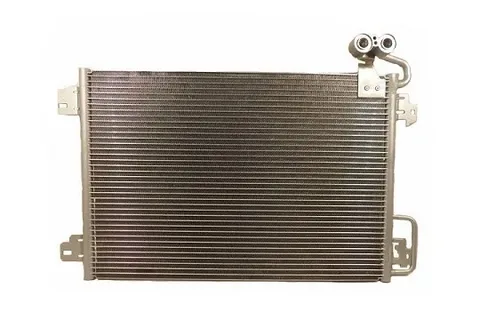
What Does the AC Condenser Do?
The condenser is the component that makes air conditioning possible by releasing heat outside the vehicle.
Here is how it fits into the AC cycle: hot, high-pressure refrigerant gas leaves the compressor and travels to the condenser. The condenser — a finned heat exchanger mounted at the front of the engine bay — releases the heat from the refrigerant into the outside air as air passes through the fins. The refrigerant then cools down and continues through the system to cool the cabin.
Without a properly functioning condenser, the AC system cannot complete its heat exchange cycle. Hot refrigerant that cannot release its heat builds system pressure, overloads the compressor, and makes cabin cooling impossible.
In Ajman’s climate — where the outside air the condenser exhausts into is already 40°C or above in summer — the condenser works at the edge of its thermal limits every day. That is why condenser problems are more common in the UAE than in cooler countries.
Why Condensers Fail in Ajman
- Physical Damage from Road Debris The condenser is mounted at the very front of the vehicle, directly behind the front grille. In Ajman’s road conditions, it is in the direct path of stones, sand, and debris thrown up from the road surface. Over time — and sometimes from a single significant impact — the aluminium fins and tubes can be damaged, creating leak points in the refrigerant circuit.
- Corrosion from Salt Air Ajman’s coastal location means the condenser is exposed to salt-laden air throughout its service life. Salt air is particularly aggressive on aluminium components. Microscopic corrosion develops on the condenser surface and gradually penetrates the refrigerant tubes — creating leaks that allow refrigerant to escape slowly.
- Clogging from Dust and Debris Even without physical damage, a condenser that is not regularly cleaned accumulates dust, sand, and organic debris in its fins. Severely clogged fins block airflow, preventing the refrigerant from releasing heat efficiently. The system works harder, compressor load increases, and cooling performance drops.
- Vibration-Related Stress Cracking Vehicle vibration from Ajman’s road surfaces — speed bumps, rough sections, and highway driving — creates fatigue stress at the condenser’s mounting points and along its tube connections. Over time, this can develop into micro-cracks that allow refrigerant to leak.
- Age-Related Seal and Connection Deterioration The seals and O-rings at the condenser’s inlet and outlet connections deteriorate with heat and age. In Ajman’s under-bonnet temperatures, this degradation happens faster than in cooler climates.
Other Car Repair Services
- Regular AC Service
- High Performance AC Service
- Cooling Coil Replacement
- Condenser Replacement
- Compressor Replacement
- Heating Coil Replacement
- V-Belt Replacement
- AC Blower Motor Replacement
- Radiator Replacement
- Radiator Fan Motor Replacement
- Radiator Flush & Clean
- AC Inspection
- AC Condenser Cleaning
- Drive Belt Lubrication
Signs Your Condenser Needs Attention
AC cooling well on the highway but warm in traffic:
This is one of the clearest signs of a condenser problem. On the highway, the airflow through the condenser fins is driven by the vehicle’s speed — providing effective heat rejection even in high ambient temperatures. In slow traffic, the only airflow through the condenser comes from the radiator cooling fan. If the condenser is clogged or leaking, this reduced airflow is not enough to maintain efficient cooling.
Gradual loss of AC performance over weeks:
A condenser leak allows refrigerant to escape slowly. The AC cools less effectively over weeks and months — not suddenly. If your system has been gradually deteriorating rather than failing at once, a condenser leak is a strong suspect.
Refrigerant top-ups that do not hold:
If the system is topped up and cools initially, but loses performance again within a few weeks, an active refrigerant leak is present. The condenser — exposed at the front of the vehicle — is one of the first places checked in a leak investigation.
Visible damage, oil staining, or debris on the condenser:
A visual inspection of the condenser from the front of the vehicle can sometimes reveal obvious physical damage, bent fins, or a greasy oil stain — which is often refrigerant oil escaping through a leak point.
System pressure readings outside normal range:
During a pressure test, a leaking or failing condenser produces abnormal high-side pressure readings. Our technicians identify this during the diagnostic process.
Diagnosing a Condenser Problem
At Marwat Garage Ajman, we do not recommend condenser replacement without a proper diagnosis. Several AC faults produce similar symptoms — and only accurate testing identifies the specific source.
- High and Low Side Pressure Test We test system pressure on both sides of the AC circuit. A condenser problem typically shows up as abnormal high-side pressure — either too low (indicating a high-side leak) or too high (indicating a blocked condenser restricting refrigerant flow).
- Visual Inspection and Leak Detection The condenser is visually inspected for physical damage, fin blockage, and visible leak signs. UV dye or electronic leak detection equipment is used to confirm any refrigerant leak and locate it precisely on the condenser body or connections.
- Airflow Assessment We check whether the condenser fins are clear enough to allow adequate airflow. A severely clogged condenser can sometimes be restored with a thorough cleaning — replacement may not be necessary if the structure is intact and no leak is present.
Only when diagnosis confirms a condenser leak, structural damage, or deterioration beyond cleaning do we recommend replacement.
The Condenser Replacement Process
- Refrigerant Recovery Before opening the AC circuit, all remaining refrigerant is recovered using proper recovery equipment.
- Condenser Removal The front end is accessed, refrigerant lines are disconnected, and the damaged condenser is removed. All connected components — receiver/drier, O-rings, and line connections — are inspected at this stage.
- Receiver/Drier Replacement When a condenser is replaced, the receiver/drier — which removes moisture from the refrigerant circuit — is also replaced. Opening the AC system introduces moisture, and a fresh drier ensures the circuit is properly protected after recharge.
- New Condenser Installation A new condenser matched to your vehicle’s make and model is fitted with new O-rings at all connection points.
- System Vacuum and Recharge The system is placed under deep vacuum to remove all air and moisture, then recharged with the correct quantity of refrigerant to the manufacturer’s specification.
- Performance Test The AC is run and vent temperatures are measured to confirm the replacement has restored full cooling performance.
The full service takes approximately 8 hours and comes with a 3-month warranty. Additionally, the replacement improves overall AC cooling efficiency — a new, clean condenser releases heat more effectively than a deteriorated one, which reduces compressor load and improves cooling across the whole system.
Condenser Replacement and Long-Term AC Health
A new condenser does more than fix the immediate problem. It resets the heat rejection component of the AC system to its designed performance level.
With a clean, leak-free condenser:
- Compressor load returns to normal — extending compressor life
- System pressure stabilises — reducing stress on all refrigerant circuit components
- Cabin cooling improves — particularly noticeable in Ajman’s traffic conditions where condenser efficiency is most critical
- Refrigerant consumption stops — the slow loss from a leaking condenser is eliminated
In Ajman’s summer heat, a properly functioning condenser is the difference between comfortable driving and an AC system that cannot keep up with the conditions.
Why Marwat Garage Ajman for Condenser Replacement
At Marwat Garage, we diagnose before we replace. A condenser replacement is recommended only when testing confirms that replacement is the correct solution — not because it is the easiest or most profitable recommendation.
We use correct specification condensers for each vehicle, replace the receiver/drier as part of the service, and recharge the system to the manufacturer’s exact specification. The result is an AC system that performs properly from the first day after service.
Our team is experienced with condenser replacement across all major vehicle brands — Japanese, Korean, European, American, and Chinese models in all body configurations.
Frequently Asked Questions
We now have an FAQ list that we hope will help you answer
some of the more common ones.
The cost varies depending on your car’s make, model, and the type of key system it uses. Basic remote key fob programming is affordable, while smart key and proximity key programming for newer vehicles may cost more due to the advanced software required. Call us on +971-564761112 for a specific quote for your car.
In most cases, yes — but it depends on the make and model. Some vehicles require at least one working key to programme a new remote, while others allow a complete key replacement via OBD2 access. Our technicians will advise you after a quick diagnostic check.
If a fresh battery has not solved the problem, your key fob may have lost its synchronisation with the car’s ECU — this is a common issue after a battery change or flat car battery. The fix is a simple reprogramming, which we can do while you wait at our garage in Ajman.
Most key fob programming jobs take between 30 minutes and one hour. Smart key programming for newer models may take slightly longer if it requires extended ECU communication. We will give you an accurate time estimate when you bring in your vehicle.
We can source compatible replacement key fob shells and remotes for most popular vehicle makers sold in the UAE. If you already have a new fob, we can programme it for you. Call ahead to confirm availability for your specific model.
Got a questions?
Pulvinar neque laoreet suspendisse interdum consectetur libero id faucibus nisl. Lectus urna duis convallis convallis tellus.
Schedule Your Appointment Today
Your Automotive Repair & Maintenance Service Specialist