CV (Constant Velocity) Maintenance
CV (Constant Velocity) Joint Maintenance: The Complete Guide for UAE Drivers
There’s a good chance you’ve never thought about your car’s CV joints — until something goes wrong. That clicking sound when you turn a corner. That vibration you feel under the seat at highway speed. That grease splattered inside your wheel arch. These are all signs that your CV joint is trying to get your attention — and you really should listen.
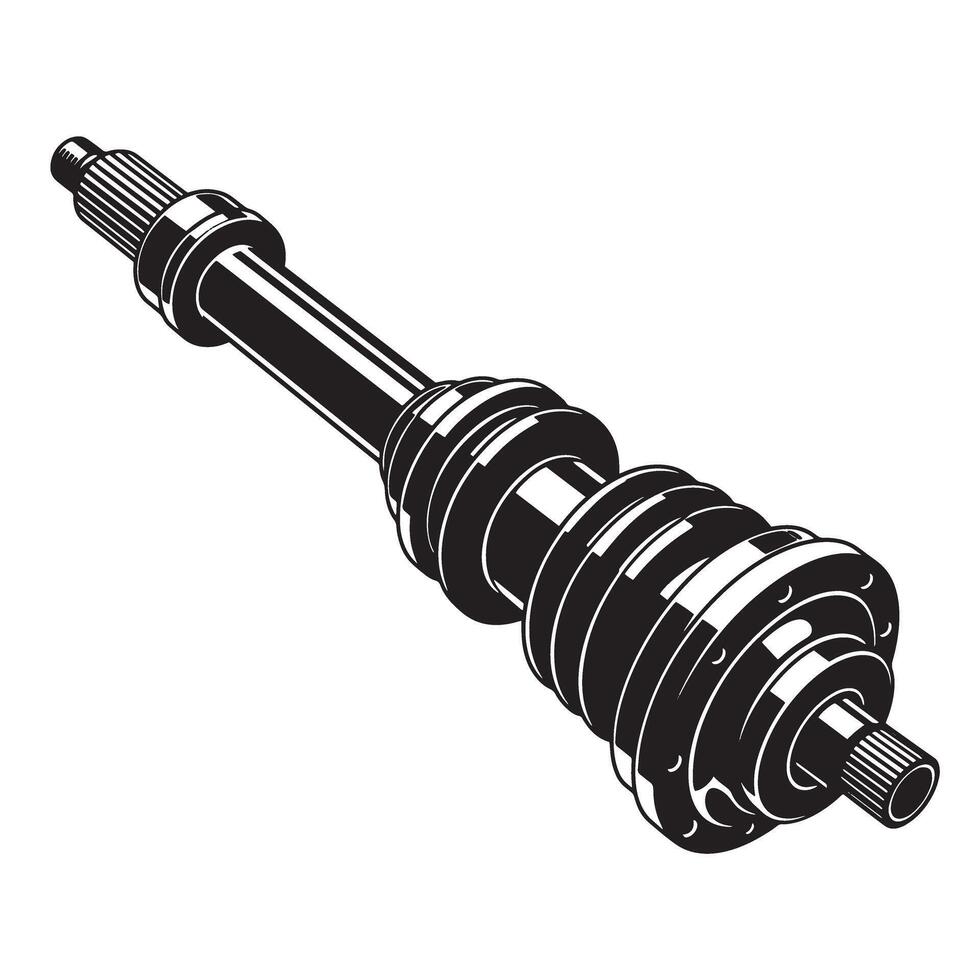
CV joints are critical components in your car’s drivetrain. They transfer power from the transmission to the wheels while allowing for the constant up-and-down and side-to-side movement that driving demands. When they fail, you don’t just lose comfort — you can lose control of your vehicle.
For drivers in Ajman and across the UAE, the combination of heavy urban traffic, speed bumps, desert road conditions, and extreme heat creates a particularly demanding environment for CV joints. This guide explains everything you need to know — what CV joints do, how to spot problems early, and how proper maintenance keeps them running longer.
What Is a CV Joint and What Does It Do?
CV stands for Constant Velocity. A CV joint is a type of flexible coupling that transfers rotational power at a constant speed, even when the shaft is at an angle. This is essential because your car’s wheels are never in perfect alignment with the transmission — they move up and down with the suspension and turn left and right for steering.
Without CV joints, the variation in angles would cause power delivery to pulse and surge at the wheels. CV joints absorb that variation and deliver smooth, consistent torque regardless of the wheel’s position.
Most modern front-wheel drive and all-wheel drive vehicles use CV joints on both ends of each drive shaft:
- The outer CV joint connects to the wheel hub. It has to handle the sharpest angles — especially during tight turns — so it is built to flex significantly.
- The inner CV joint connects to the transmission. It handles less angular movement but more axial (in-out) movement as the suspension compresses and extends.
Rear-wheel drive vehicles typically use a different type of universal joint, but many modern performance and AWD vehicles also use CV joints at the rear axle.
Types of CV Joints
Understanding the type of joint your vehicle uses helps you understand how it behaves and where problems typically develop.
Ball-Type (Rzeppa) CV Joints
The Rzeppa joint is the most common outer CV joint. It uses six steel balls positioned between an inner and outer race, held in place by a cage. As the shaft angles, the balls roll to maintain constant velocity. These joints handle high angular movement very well, making them ideal for steering knuckles that turn up to 45 degrees or more.
Tripod (Spider) CV Joints
Tripod joints are most commonly used as inner CV joints. They use three roller bearings on a spider-shaped carrier that slides inside a housing. This design allows axial plunging — the shaft can extend and compress as the suspension moves — making tripod joints excellent for the inner position. They produce less friction and heat than ball-type joints under normal operation.
Double Offset and Cross-Groove Joints
These are less common variants used in specific applications, typically for high-performance or specialist vehicles where the angle range and torque requirements exceed what standard ball joints can handle.
Other Car Repair Services
- Minor 5000 Km Service
- Routine 7000 KM Service
- Windshield Wipers
- CV (Constant Velocity) Maintenance
- Major 10,000 KM Service
- Belts & Hoses
- Vehicle Value & Car Pricing Service
- Headlight Aiming
- Battery Change-Over & Charging
- 7,500, 15k, 30k, & 60k Km Maintenance
- Transmission Fluid Service
- Lighting (Bulb Replacement)
- Cooling System Flush & Exchange
The CV Boot: The Unsung Hero of CV Joint Longevity
If the CV joint is the engine of the axle system, the CV boot is its life support. The CV boot is a flexible rubber or thermoplastic sleeve that surrounds the CV joint. It seals in the grease that lubricates the joint and keeps out water, dust, and road debris.
In the UAE, where roads carry fine sand and grit and temperatures push rubber materials to the limit, the CV boot takes serious abuse. It flexes millions of times over its service life. It bakes in the summer heat. It gets pelted with sand and stones.
When the boot cracks or tears, grease escapes. Once the grease is gone, metal-on-metal contact begins inside the joint. What was a cheap boot replacement quickly becomes an expensive CV joint replacement — or worse, a complete axle assembly.
Inspecting the CV boots at every service is the single most effective thing you can do to prevent premature CV joint failure. A torn boot found early is a small repair. A damaged joint found late is a big one.
Warning Signs of a Failing CV Joint
CV joints don’t usually fail without warning. Pay attention to these signals:
Clicking or Popping Noise During Turns
This is the most classic symptom of a worn outer CV joint. You’ll hear a distinct click or pop — sometimes rhythmic, sometimes sharp — when turning, especially under light acceleration. The noise often gets louder on full-lock turns, like when pulling out of a parking space or doing a U-turn. In UAE cities where tight turns and roundabouts are constant, this symptom becomes very noticeable very quickly.
Vibration or Shuddering During Acceleration
A worn inner CV joint often causes vibration or shuddering when accelerating from a stop or at low speeds. The vehicle may feel like it is juddering or struggling to transfer power smoothly. This symptom can sometimes be confused with engine mounts or transmission problems, so proper diagnosis is important.
Grease on the Inside of the Wheel or Tyre
If you notice a dark, sticky grease coating on the inside of your wheel rim or splattered around the wheel arch, this is a strong indicator that a CV boot has failed and grease is being flung out as the shaft rotates. By this point, the joint itself may already be contaminated and damaged.
Clunking or Thudding When Changing Direction
A more serious symptom — clunking when shifting from reverse to drive, or a heavy thud when the steering wheel reaches full lock — suggests significant wear in the joint. The internal components have excessive play and are knocking against each other.
Vibration at Highway Speed
While this can have many causes (tyres, wheel balance, driveshaft balance), a worn inner CV joint or damaged driveshaft can also produce vibration that increases with vehicle speed. If the vibration is accompanied by any of the other symptoms above, the CV system should be inspected as a priority.
What Causes CV Joints to Fail?
Understanding the causes of CV joint failure helps you make smarter choices about maintenance and driving habits.
- Torn or cracked CV boot — As described above, this is the leading cause of CV joint failure. Once the boot splits, it’s only a matter of time. In Ajman’s extreme heat, rubber boots can crack as early as 3 to 4 years depending on the quality of the material and how the car is used.
- High-impact driving — Hitting speed bumps hard, driving over rough terrain, or taking sharp turns at speed all accelerate CV joint wear. The UAE’s roads are full of speed bumps — how you approach them matters.
- Age and mileage — CV joints have a finite lifespan. On a well-maintained vehicle, they can last 150,000 to 200,000 kilometres or more. On poorly maintained vehicles — or those exposed to harsh conditions without regular service — they can fail much earlier.
- Contaminated or insufficient lubrication — If the boot was never replaced after early damage, the joint runs with contaminated or depleted grease. Sand and water in the joint accelerate wear dramatically.
- Bent or damaged axle shaft — An impact that bends the driveshaft changes the operating angles of the CV joints, creating stress they were not designed to handle continuously.
CV Joint and Axle Maintenance: What to Do and When
Proper maintenance of the CV system is straightforward and far less expensive than repairs. Here’s what responsible maintenance looks like:
Regular Boot Inspections
Every time your vehicle is serviced, the technician should visually inspect all CV boots. This takes less than a minute with the car on a lift. Look for cracks, tears, splits, or signs of grease leakage. In the UAE, we recommend boot inspections every 10,000 to 15,000 kilometres given the heat and road conditions.
Prompt Boot Replacement
If a boot shows any sign of cracking or has a minor tear with the grease still intact, replace it immediately. A quality CV boot replacement is a relatively affordable repair. Waiting turns it into a joint replacement — sometimes a complete axle replacement — which costs significantly more.
CV Joint Regreasing
When replacing a boot, a competent mechanic will also clean out the old grease, inspect the joint for wear, and pack in fresh grease before fitting the new boot. Skipping the regrease at boot replacement time is a common shortcut that leads to premature joint failure even after the boot is fixed.
Full CV Joint or Axle Replacement
When a joint is already clicking, shuddering, or showing internal wear, a boot replacement alone won’t save it. At this stage, the joint itself — or the entire axle assembly — needs to be replaced. Many workshops replace the complete axle shaft (which includes both inner and outer joints pre-assembled) as this often works out more reliable and cost-effective than replacing individual joints.
Post-Repair Road Test
After any CV or axle work, a proper road test should be conducted. The technician should test the vehicle through full steering lock in both directions and check for noise, vibration, or any abnormal behaviour before returning the car to the customer.
CV Joints in the UAE Context: Why Maintenance Is More Critical Here
The UAE’s environment places extra demands on CV joints compared to milder climates:
- Heat degrades rubber faster. CV boots in Ajman bake in summer temperatures that regularly exceed 45°C in the shade and far higher on road surfaces. This thermal cycling — hot days, cooler nights, year-round — cracks rubber in a fraction of the time it would take in Europe or North America.
- Fine sand is abrasive. Even a pinhole in a CV boot lets in desert sand. Those microscopic particles act like sandpaper inside the joint, grinding down the precision surfaces that allow the joint to operate smoothly.
- Speed bumps are everywhere. The UAE has one of the highest densities of speed bumps in the world. Each one — if taken too fast — puts a shock load through the axle and CV joints that compounds over time.
- Urban driving patterns. Stop-start traffic, frequent U-turns, and tight parking manoeuvres all demand maximum steering angle more often than motorway driving. This is hardest on outer CV joints.
For drivers in Ajman who commute daily and use their vehicles heavily, we recommend discussing a specific CV boot inspection schedule with your garage rather than relying solely on the standard service intervals.
Can You Drive with a Damaged CV Joint?
Technically, yes — for a short time. Practically, no — it’s not worth the risk.
A clicking CV joint will continue to click for a while before it fails completely. But joint failure is rarely gradual. When a CV joint goes, it often goes suddenly. The axle can separate, leaving you with zero drive to that wheel. In a worst-case scenario, a catastrophic CV failure at speed can cause a loss of directional control.
Beyond the safety issue, driving on a damaged CV joint accelerates wear on connected components — the wheel bearing, the transmission, the suspension — turning one repair into several.
The sensible approach: the moment you hear clicking on turns or feel any unexplained vibration, get it checked. Early diagnosis is almost always cheaper and safer.
Why Choose Marwat Garage for CV Joint Service in Ajman?
When it comes to safety-critical parts like CV joints and axle shafts, choosing the right garage matters. At Marwat Garage, Ajman, we start with accurate diagnostics and never recommend unnecessary replacements. We use proper tools and calibrated equipment for every job, ensuring safe and precise repairs. Only quality parts with warranty are fitted, giving you peace of mind. Our technicians handle all drivetrains and popular UAE vehicles, from sedans to AWD SUVs. Every repair ends with a thorough road test, and transparent, itemised pricing ensures no hidden charges—work starts only after your approval.
Frequently Asked Questions
We now have an FAQ list that we hope will help you answer
some of the more common ones.
The cost varies depending on your car’s make, model, and the type of key system it uses. Basic remote key fob programming is affordable, while smart key and proximity key programming for newer vehicles may cost more due to the advanced software required. Call us on +971-564761112 for a specific quote for your car.
In most cases, yes — but it depends on the make and model. Some vehicles require at least one working key to programme a new remote, while others allow a complete key replacement via OBD2 access. Our technicians will advise you after a quick diagnostic check.
If a fresh battery has not solved the problem, your key fob may have lost its synchronisation with the car’s ECU — this is a common issue after a battery change or flat car battery. The fix is a simple reprogramming, which we can do while you wait at our garage in Ajman.
Most key fob programming jobs take between 30 minutes and one hour. Smart key programming for newer models may take slightly longer if it requires extended ECU communication. We will give you an accurate time estimate when you bring in your vehicle.
We can source compatible replacement key fob shells and remotes for most popular vehicle makers sold in the UAE. If you already have a new fob, we can programme it for you. Call ahead to confirm availability for your specific model.
Got a questions?
Pulvinar neque laoreet suspendisse interdum consectetur libero id faucibus nisl. Lectus urna duis convallis convallis tellus.
Schedule Your Appointment Today
Your Automotive Repair & Maintenance Service Specialist